It all began with a king who loved to collect
To understand the Prado you have to go back to the 1500s, to the reign of emperor Charles V. He commissioned an important number of works from the most famous painters of his age, and that was the real beginning of what would later be called the Royal Collections. Unlike the Louvre or the British Museum, the heart of the Prado was not built on looting but on centuries of royal patronage and personal taste. Every king who followed added to the collection, and each one seemed determined to outdo the last.
- The collection started as a private royal passion, not a public museum
- Charles V set the tone by hiring the best European painters of the era
- Each successive monarch expanded the holdings for generations
The masterpieces the crown gathered
Because the Royal Collections grew with every reign, the Prado ended up holding some of the most incredible masterpieces in the history of Western art. These are not minor works tucked away in a corner, they are the paintings that pilgrims of art travel across the world to stand in front of. You could spend a whole day admiring just one artist and still leave feeling you had rushed.
- Bosch's Garden of Earthly Delights, the museum's most hypnotic triptych
- Velazquez's Las Meninas, considered by many the greatest painting ever made
- Rubens's The Three Graces, a highlight of the Flemish rooms
- Countless other works by Titian, El Greco and the Spanish masters
Why not experience it with a local guide?
Book a free tour through central Madrid: local guides, small groups and no upfront payment.
See the free tours →From a science cabinet to a national museum
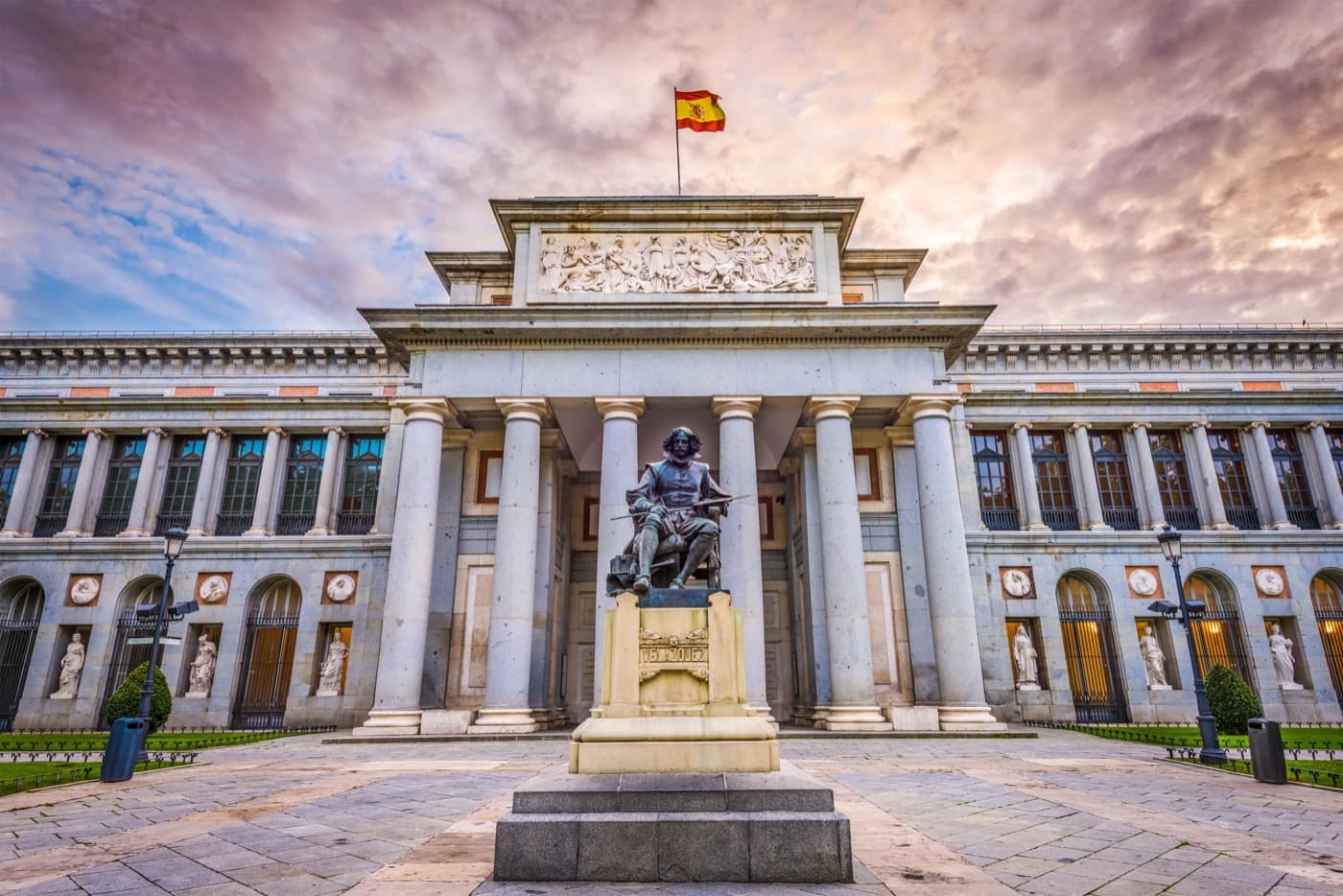
Here is the twist that most visitors never hear. In the last years of the 1700s, the Crown ordered the construction of a building that was meant to be a natural sciences cabinet, a home for plants, minerals and specimens rather than paintings. History had other plans. The building instead became the National Prado Museum, which opened its doors in 1819 with the pieces that formed the Royal Collections. What was designed for the study of nature became one of the temples of European painting.
- Originally conceived as a cabinet of natural sciences in the late 1700s
- Opened to the public as a museum in 1819
- Filled from day one with the paintings of the Royal Collections
How the collection kept growing
The Prado did not stop at the royal paintings. Over time it absorbed works from other institutions and welcomed pieces through very different routes. Some arrived when other museums closed or merged, others were donated by private collectors, and a few were simply bought when the chance came up. That mix is exactly why the collection feels so rich and so varied today.
- Works from the Museo de la Trinidad and the old Modern Art Museum joined the Prado
- Private donations enriched it, most famously Goya's haunting Black Paintings
- Direct purchases added gems such as Pieter Bruegel the Elder's The Wine of Saint Martin's Day
Why the Prado rewards a slow, guided visit
That is how the Prado assembled such a huge and, above all, such a beautiful collection. The problem for a first-time visitor is scale. There is simply too much to take in on your own, and it is easy to walk past a world-changing painting without realising what you are looking at. The museum is so rich that it truly deserves to be seen with someone who knows it, someone who can point you to its most precious treasures and its darkest secrets rather than leaving you to wander the endless galleries alone.
- The collection is enormous, so a plan beats aimless wandering
- A guide connects the paintings to the kings and stories behind them
- You leave understanding what you saw, not just how many rooms you crossed
Why not experience it with a local guide?
Book a free tour through central Madrid: local guides, small groups and no upfront payment.
See the free tours →Explore the Prado with us
If this story has made you curious, the best way to feel it is to stand in those rooms yourself. Our tours in Madrid are built around exactly this kind of narrative, turning a wall of famous names into a living history you can follow from Charles V all the way to Goya. Come and let us show you how a collection born from royal ambition became the museum we love most in the world.
Why not experience it with a local guide?
Book a free tour through central Madrid: local guides, small groups and no upfront payment.
See the free tours →