Why Madrid eats meat, not seafood
Madrid sits in the geographic center of the Iberian Peninsula, with no coastline for hundreds of kilometers in any direction. That location shaped its kitchen: instead of the fish and shellfish you find in Valencia or the north, the capital built its identity around pork, lamb and slow-cooked stews that stretched a modest budget across a whole family. Understanding that is the key to reading a Madrid menu, because most of the classics you will see grew out of home cooking rather than restaurant invention.
Bocadillo de calamares and cocido madrileño
Two dishes tell you almost everything about how Madrid eats. The bocadillo de calamares, or squid sandwich, is exactly what it sounds like: crisp fried squid rings packed between two thick pieces of bread, ideally with a squeeze of lime, a little mayonnaise or a dab of spicy brava sauce. The best ones are found around Plaza Mayor, which happens to be a stop on our free walking tour. Cocido madrileño is the other side of the city's soul, a hearty pot of chickpeas, vegetables and various cuts of pork boiled together and served in courses, first the broth, then the meat and vegetables. It was a survival dish for hard times, and it is still enormous, so order one between two people.
- Bocadillo de calamares: fried squid in bread, best around Plaza Mayor
- Cocido madrileño: a filling chickpea and pork stew, served in courses and easy to share
Why not experience it with a local guide?
Book a free tour through central Madrid: local guides, small groups and no upfront payment.
See the free tours →Callos and roast suckling pig or lamb
If you want to eat the way old Madrid did, order callos a la madrileña. This beef tripe stew looks humble but delivers deep flavor, cooked in a rich broth seasoned with paprika, tomato and garlic, and it is made for dipping bread into the sauce. It reflects a very Spanish idea: use every part of the animal. For something more celebratory, look for cochinillo or cordero asado, roast suckling pig or lamb. These are really the signatures of nearby Segovia and Toledo, but Madrid has excellent versions too, including at what is recognized as the oldest restaurant in the world. If you fall in love with the roast, our day trips to Toledo and Segovia take you straight to the source.
- Callos a la madrileña: paprika-spiced beef tripe, perfect with bread
- Cochinillo and cordero asado: roast suckling pig and lamb, a specialty of Segovia and Toledo
Tapas, croquetas and tortilla de patatas
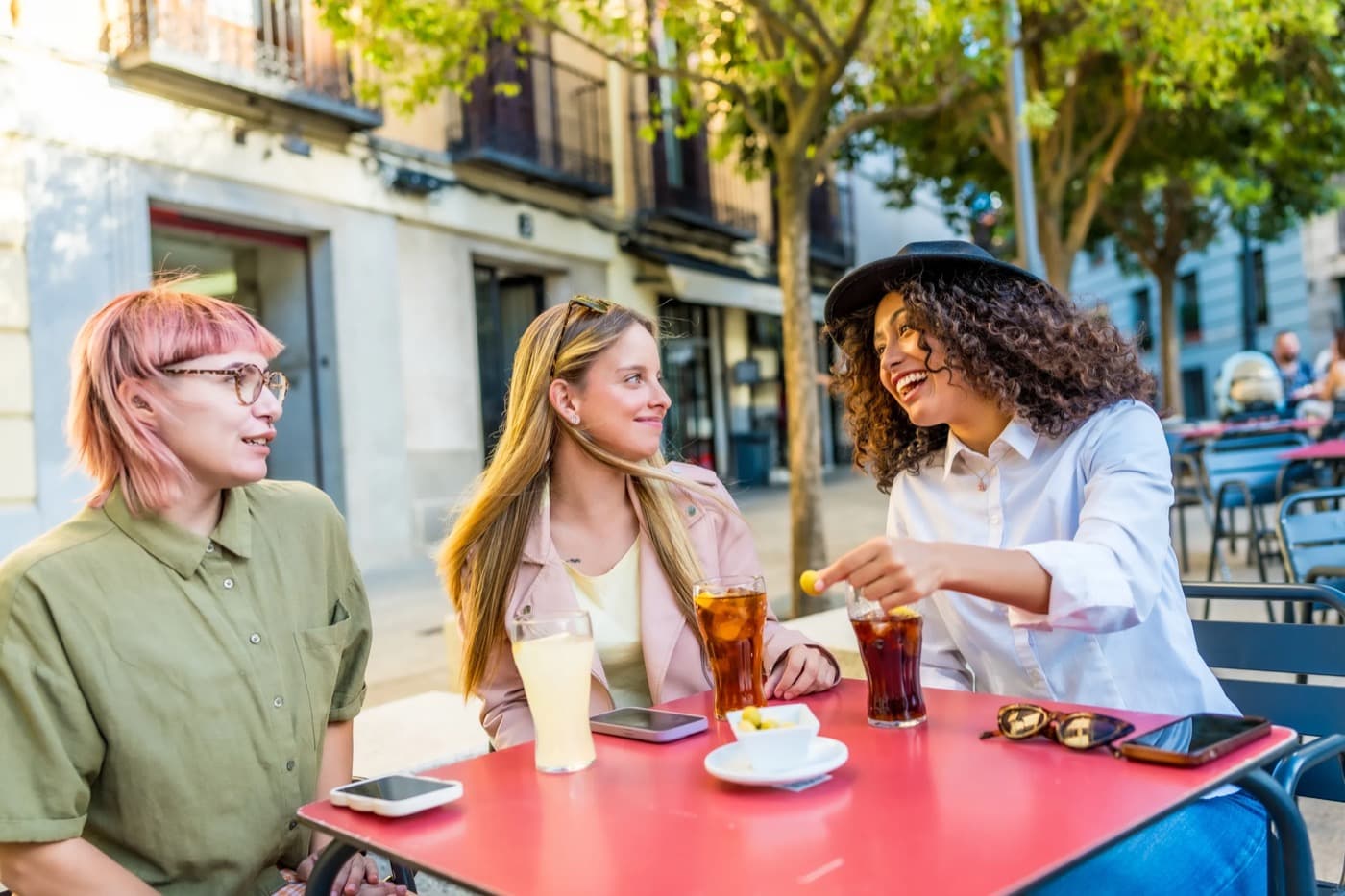
No Spanish food guide is complete without tapas, probably the most famous word in the country's cuisine. Traditionally a tapa was a small piece of ham or cheese served free with a drink, and in some Madrid bars that custom still holds. Today it has grown into a whole culture of small plates. Among the most beloved are croquetas de jamon y queso, creamy ham and cheese croquettes that come in endless variations like mushroom, cod or chicken, and tortilla de patatas, the Spanish omelette. A good tortilla is cheap, filling and comforting, often eaten cold in a bocadillo for breakfast. On our free walking tour we point you toward the best tapas spots and tell the story behind the tradition.
- Tapas: small plates, sometimes still free with a drink in traditional bars
- Croquetas de jamon y queso: crispy outside, creamy inside, in many flavors
- Tortilla de patatas: the classic potato omelette, great any time of day
Patatas bravas, paella and the sauces of Madrid
Madrid loves its potatoes, and two sauces define how they are served. Patatas bravas come with a warm sauce of olive oil, tomato and sweet and spicy peppers, while patatas alioli are dressed with a garlicky blend of olive oil, egg and vinegar. As with almost every dish here, good olive oil is the foundation. Paella is technically a Valencian dish, built originally on rice, vegetables, rabbit and spices, though the seafood and chicken versions have become just as popular. In Madrid you need to choose carefully, because there is plenty of mediocre frozen paella aimed at tourists, and we will happily point you toward the places that make it properly.
- Patatas bravas: potatoes with a spicy tomato and pepper sauce
- Patatas alioli: potatoes with a rich garlic and olive oil sauce
- Paella: a Valencian rice dish, worth seeking out from a kitchen that cooks it fresh
Why not experience it with a local guide?
Book a free tour through central Madrid: local guides, small groups and no upfront payment.
See the free tours →Chocolate con churros and what to drink
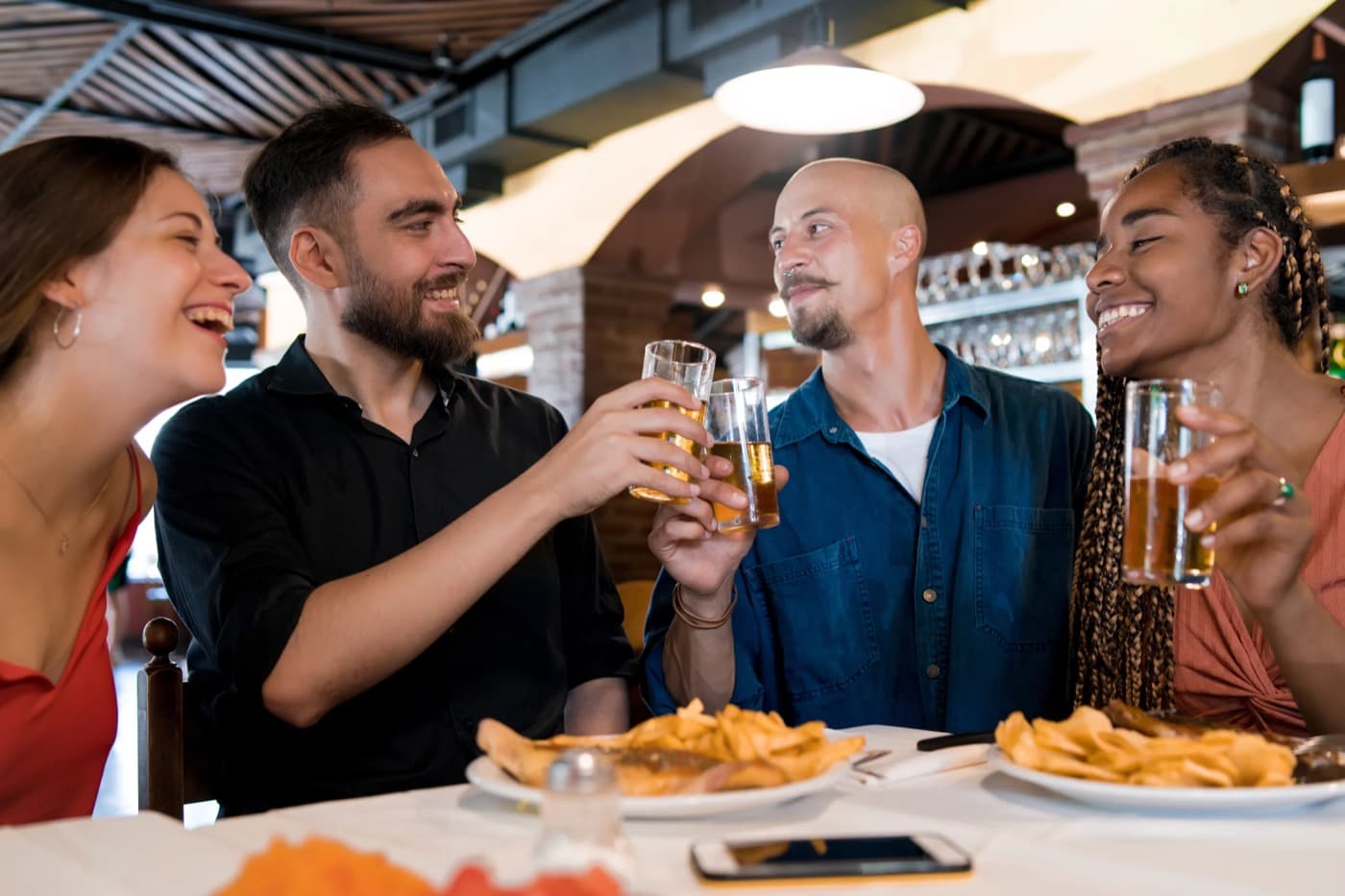
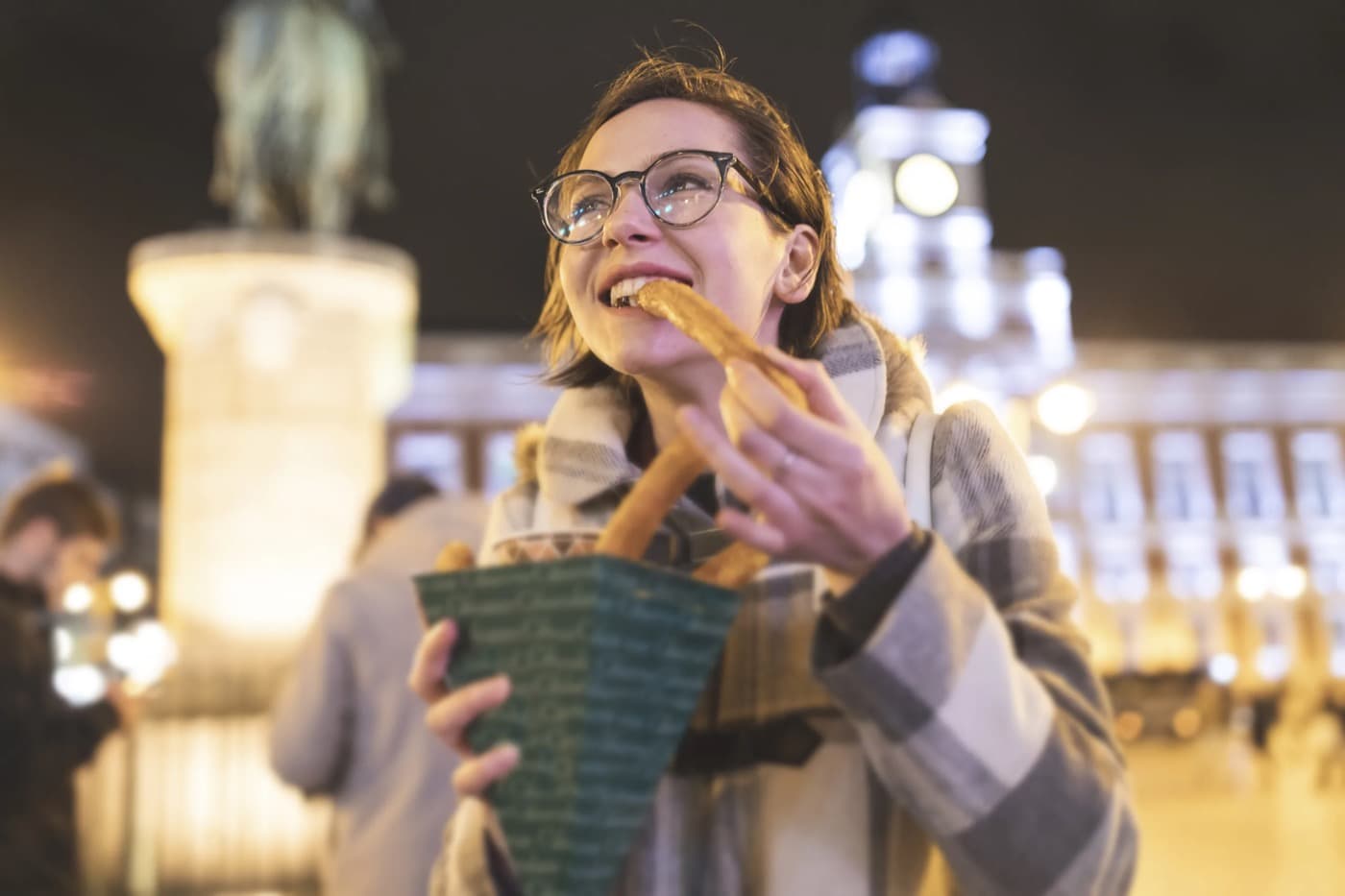
We finish where many Madrid mornings begin, with chocolate con churros. On Sundays, families gather in the city's chocolaterias for thick hot chocolate and crisp, donut-like churros made for dipping. There is even a chocolateria in Madrid that never closes, open twenty four hours, so there is no excuse to leave Spain without trying the combination at least once. To round out any of these meals, reach for a glass of Rioja or Ribera wine, a Spanish beer, a cider, a vermouth, or the local madrono liqueur. Enjoy it slowly, the way Madrid does, and you will taste the city as much as the food.
- Chocolate con churros: Madrid's favorite sweet breakfast, best on a Sunday
- Pair your meal with Rioja or Ribera wine, vermouth, cider or a cold Spanish beer
Why not experience it with a local guide?
Book a free tour through central Madrid: local guides, small groups and no upfront payment.
See the free tours →