Madrid in Spring Is Waiting for You
Madrid in spring is a spectacle of blossom, packed terraces and sunshine that invites you to lose yourself in streets thick with history. So which ten places should top your list this season? Read on and find out.
1. El Retiro: The Urban Oasis
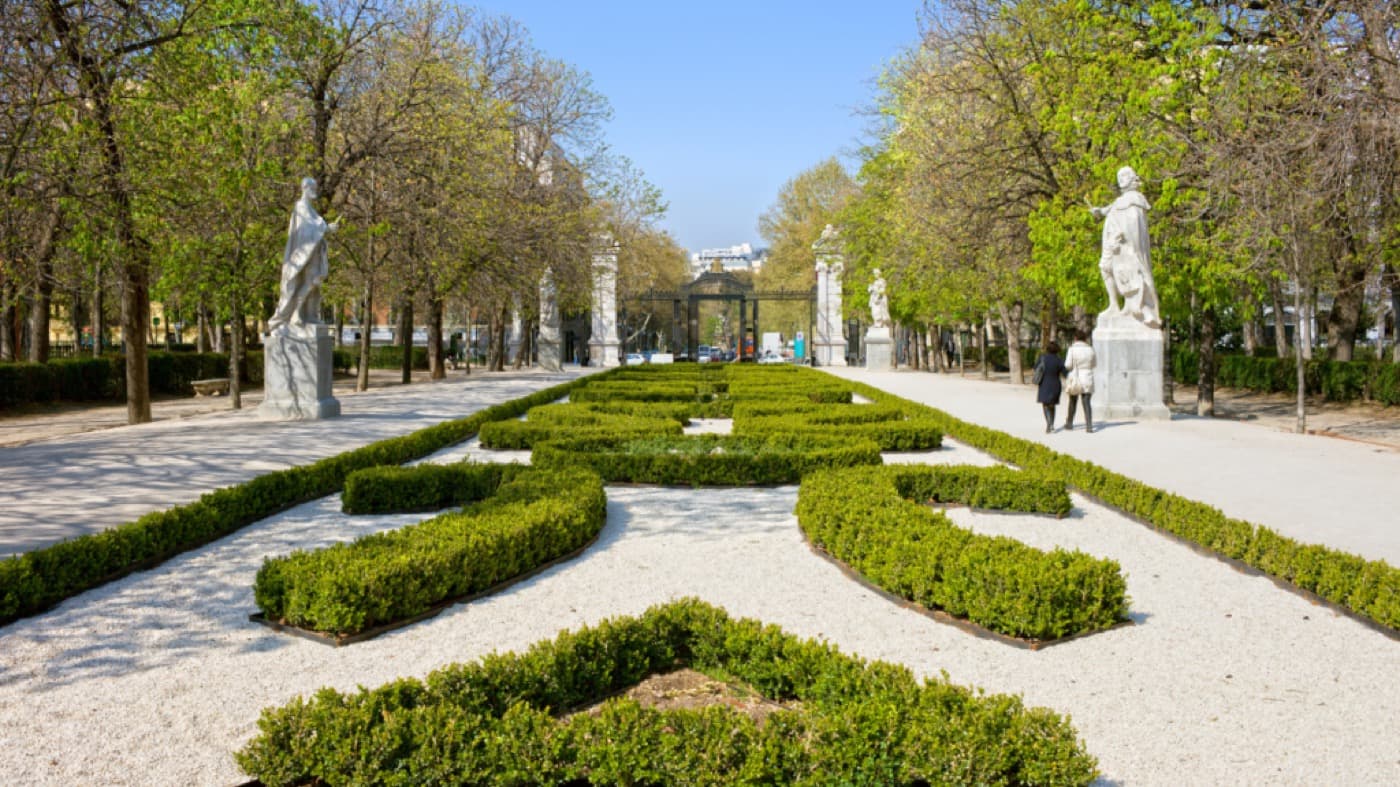
Nothing says spring in Madrid quite like a stroll through the Parque del Retiro. Between elegant pavilions, glassy ponds and street performers, it is the perfect place to spread out a picnic under the almond trees in bloom. Do not miss the Palacio de Cristal, where you can slip inside one of the rotating contemporary art exhibitions. The Retiro is far more than a pretty park, though; it is packed with history and curiosities. One of the most surprising is an underground bunker built during the Spanish Civil War. Tucked beneath the Cuesta de Moyano, this shelter was designed to protect citizens from the bombing raids, and it is one of many that went up across the city during the conflict. Nearby, the Estanque Grande invites you to hire a rowing boat and drift across the water beneath the grand Monumento a Alfonso XII. Then there is the Fuente del Angel Caido, one of the few public statues in the world dedicated to Lucifer, sitting (rather fittingly) exactly 666 metres above sea level, a detail that delights history buffs and lovers of the mysterious alike. All of this makes the Retiro a place to relax in nature and, at the same time, to brush up against the history and culture at the very heart of Madrid.
Why not experience it with a local guide?
Book a free tour through central Madrid: local guides, small groups and no upfront payment.
See the free tours →2. El Rastro: A Market Steeped in History
El Rastro is far more than a flea market; it is a genuine cultural icon with roots stretching back to the mid-17th century. In its earliest days it was an informal market run by workers from the nearby slaughterhouse, who sold second-hand clothes and salvaged goods. The name itself, rastro, refers to the trail of blood once dragged along these streets. Over time it grew into the buzzing open-air market you find today, spilling through the lanes of the Lavapies neighbourhood and drawing locals and visitors in equal measure. It is famous for its sheer variety, from antiques, furniture, books, vintage clothing and art to all manner of second-hand finds and local crafts, a paradise for bargain hunters and collectors of the unusual. El Rastro is also a social hub, where the hum of haggling mingles with live music and street performances, and the surrounding bars and cafes fill with people enjoying tapas and a drink. A Sunday morning here is one of the most immersive ways to feel the social and cultural pulse of Madrid.
3. Palacio Real: A Journey Back in Time
Prepare to be dazzled by the sheer grandeur of the Royal Palace (Palacio Real). We always recommend the guided tour, which unlocks its secrets and best stories. This is not only the Spanish monarch's official residence for state ceremonies; in terms of size, it is the largest royal palace in Western Europe. Built over the ruins of the old Alcazar, destroyed by fire in 1734, the palace we know today was designed by the architect Filippo Juvarra and his pupil Juan Bautista Sachetti, a landmark of Spanish Baroque. Among its most remarkable features is the Real Farmacia, which preserves a striking collection of porcelain jars, medicinal ingredients and centuries-old recipes, a reminder of how seriously health was taken at court. The palace also holds the only Porcelain Room in Europe entirely lined with the material, a testament to royal luxury and opulence. Within its walls you will find the Palatine Stradivarius, a priceless set of instruments crafted by the legendary luthier Antonio Stradivari; these violins, violas and cellos are among the most treasured in the world and are still played at special concerts. Every room tells a story, from the majestic State Apartments to the Salon del Trono, where you can admire dazzling frescoes by Tiepolo and delicate stucco work. A guided visit is not just a lesson in art and history; it is a window into the life and politics of the Spanish monarchy across the centuries.
4. Templo de Debod: Magical Sunsets
One of the finest places to watch the sunset in Madrid is, without question, the Templo de Debod. This ancient Egyptian temple, a gift from Egypt to Spain, offers one of the city's most romantic views. Dating from the 2nd century BC, it was presented to Spain in 1968 in gratitude for the country's help in saving the temples of Nubia, in particular during the campaign to rescue Abu Simbel as the Aswan Dam was built. What makes it so special is that it is one of the very few examples of ancient Egyptian architecture you can see outside Egypt, and the only one of its kind in Spain. Originally dedicated to Amon de Debod and later to Isis, the temple offers a rare glimpse into the beliefs and daily life of ancient Egypt. Set on a rise in the Parque del Oeste, close to the city centre, it is an ideal spot to catch the last light of the day. The temple mirrored in the nearby pool, bathed in the glow of the setting sun, creates an atmosphere that feels almost surreal, easily one of the best places in Madrid for panoramic sunset views. The surrounding park, with its paths, fountains and quiet corners, is the perfect place to pause and breathe amid the rush of the capital.
5. Gran Via: The Beating Heart of Madrid
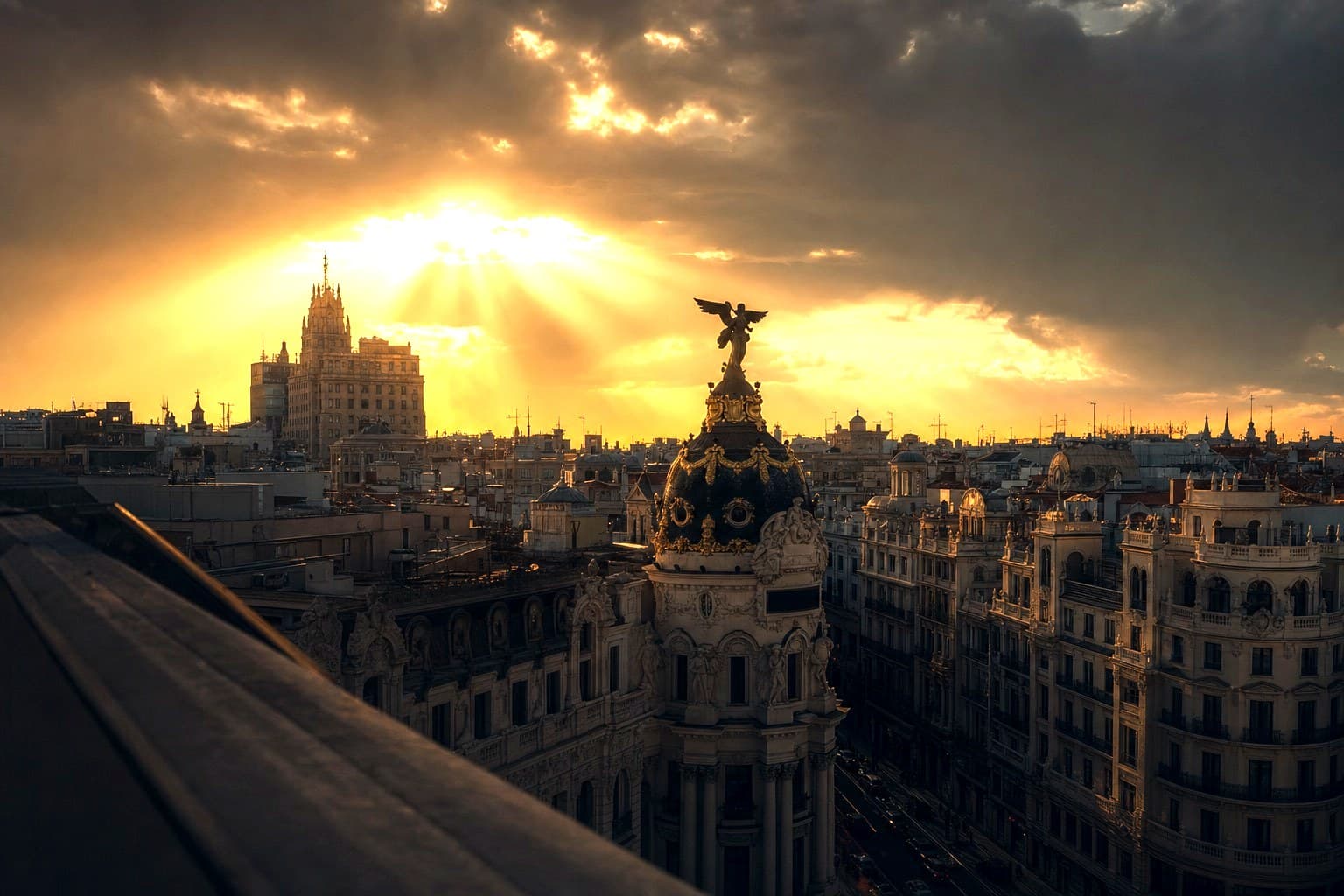
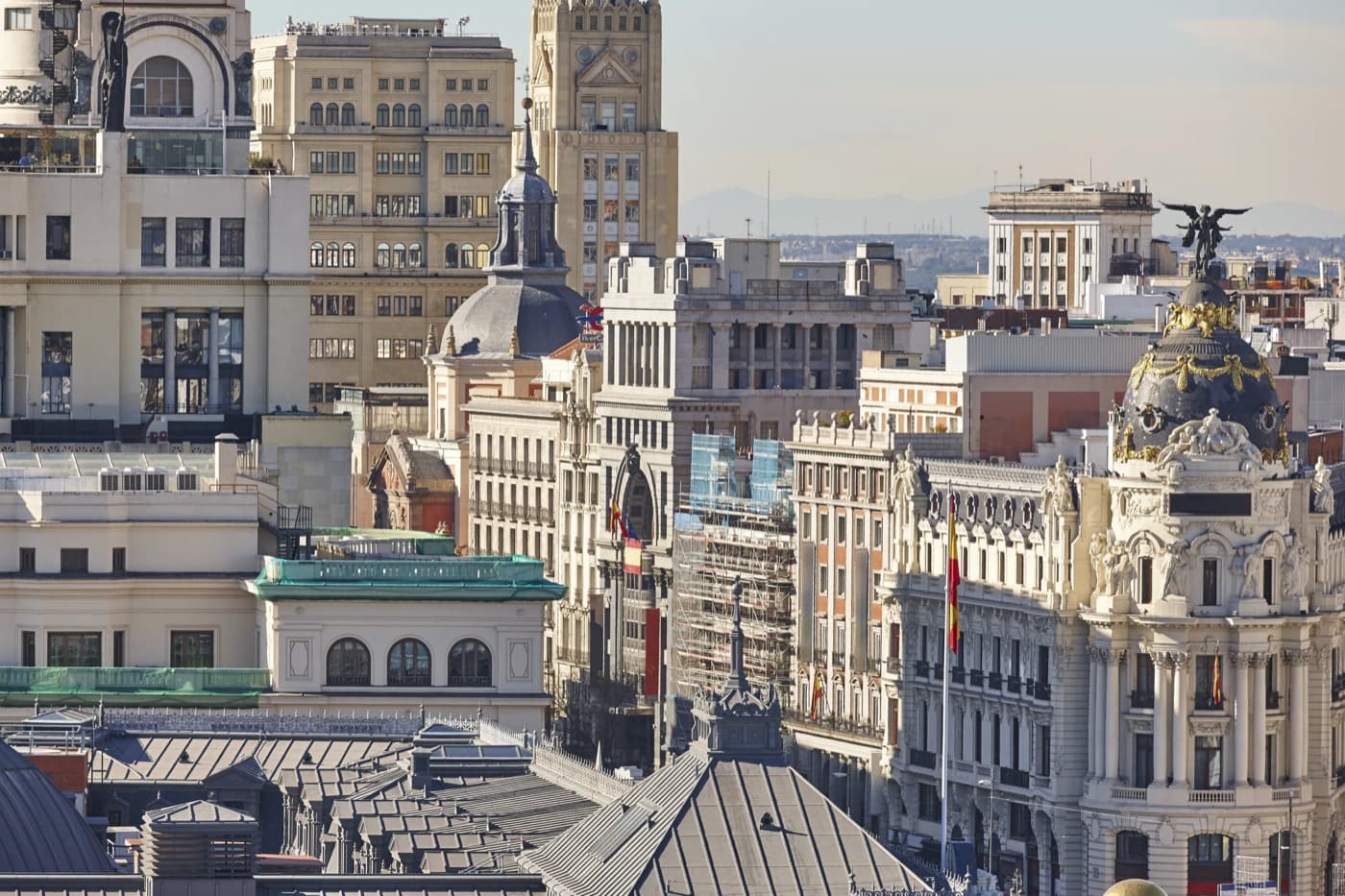
You cannot really say you have been to Madrid without walking the Gran Via. From classic cinemas to the latest flagship stores, this street is the city's vibrant, beating soul. More than a simple avenue, it is a vital artery that mirrors the spirit of Madrid and its transformation across the 20th century. Opened in 1910, this landmark boulevard was conceived as part of an ambitious modernisation plan to connect the north-west of the city with the centre. Over the decades it has been the stage for countless historic, cultural and social moments, a living record of modern Spain. Known as Madrid's Broadway, the Gran Via is famous for its many theatres, offering everything from big-budget musicals to drama and comedy, and drawing talent from Spain and abroad. The Teatro Lope de Vega and the Teatro Rialto are two of the best known, home to some of the most important productions in the country.
6. Mercado de San Miguel: A Feast for the Senses
For food lovers, the Mercado de San Miguel is an essential stop. Tapas, wines and treats of every kind await inside this historic iron-and-glass market. Just steps from the Plaza Mayor, it is far more than a market; it is a true temple of gastronomy that captures the essence of Spanish cooking. Opened in 1916, this handsome ironwork building has been carefully restored into one of the city's leading culinary destinations. Here you can taste anything from traditional tapas and fine wines to gourmet products and inventive dishes served up at the different stalls. What makes San Miguel so special is its lively, cosmopolitan atmosphere, where locals and visitors gather to share the experience. Each stall has its own speciality, from fresh seafood and Iberian ham to artisan cheeses and delicate pastries. This is not only a place to eat; it is a place to socialise and enjoy the tapas culture that runs so deep in Spanish life.
7. Barrio de las Letras: A Literary Stroll
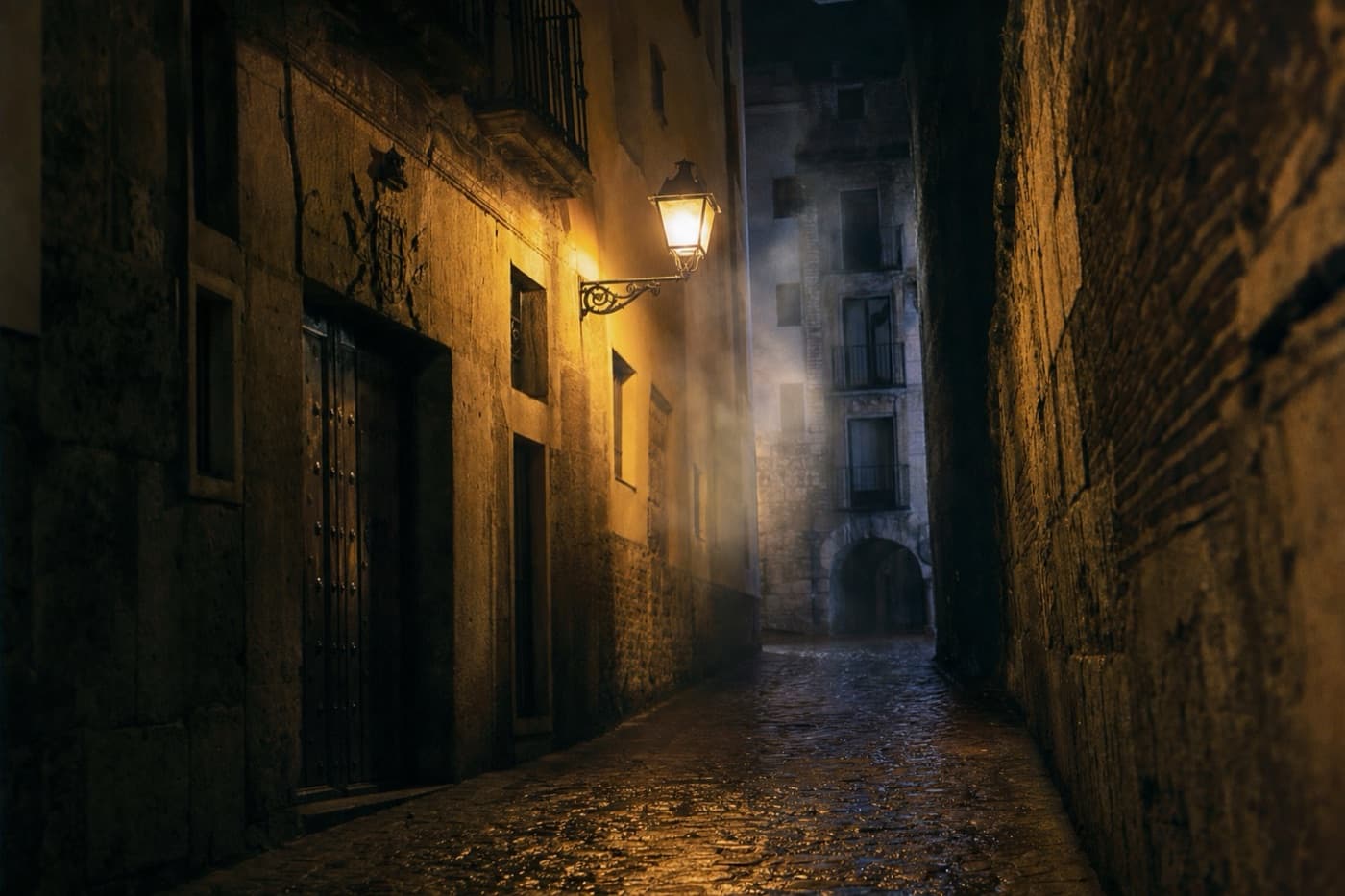
The Barrio de las Letras, also known as the writers' quarter, is one of the most charming districts in Madrid. During the Spanish Golden Age it was home to some of the country's greatest writers, from Cervantes and Quevedo to Lope de Vega, whose work still echoes through world literature. Wandering its cobbled streets is a little like walking through a poem, with literary quotations set into the pavement that invite you to reflect on the neighbourhood's cultural legacy. Beyond its rich literary past, the quarter is very much alive, full of bars, cafes, restaurants and small art and antiques shops. It is the perfect place to soak up Madrid's bohemian side, with everything from tiny galleries to independent theatres. Walk the same streets once trodden by Cervantes, Quevedo and Lope de Vega; here, art and history seem to breathe from every corner.
8. Museo del Prado: A Journey Through Art
The Museo del Prado is unmissable for anyone who loves art. From Velazquez to Goya, prepare to stand in awe before some of the most important works in history. This is not just one of the world's great art museums; it is a masterclass in the history of European art. Founded in 1819, it holds an unrivalled collection of more than 8,000 works, with a particular concentration of Spanish masters such as Velazquez, Goya and El Greco, alongside outstanding Italian and Flemish masterpieces. A visit is a deep dive into the works that shaped the Western artistic landscape, taking in not only paintings but also sculptures, drawings and much more. The rooms devoted to Velazquez and his majestic Las Meninas, or the Black Paintings of Goya, are just a few of the highlights no art lover should miss.
9. Chueca: The Neighbourhood of Diversity
Chueca is a byword for diversity, nightlife and the best alternative shopping in the city. Do not miss its bars and the chance to experience Madrid at its most authentic. This is a neighbourhood synonymous with openness and modernity at the very heart of the capital, known for its vibrant LGBTQ+ community and its role as a centre of nightlife and alternative culture. With its mix of stylish bars, clubs, design shops and cafes, Chueca welcomes everyone into a warm, inclusive atmosphere. By day it hums with fashion boutiques and small markets selling everything from vintage clothing to modern art. By night it transforms, offering some of the best nightlife in Madrid, from laid-back bars to buzzing clubs where the music and dancing carry on until sunrise.
Why not experience it with a local guide?
Book a free tour through central Madrid: local guides, small groups and no upfront payment.
See the free tours →10. Madrid Rio: Nature in the City
To finish, a walk along Madrid Rio lets you enjoy nature without ever leaving the city, perfect for a relaxed day with the family. At Trip Tours Madrid we are ready to make your visit unforgettable, whether you prefer a guided walk through the city's most iconic corners or a more personal adventure. Madrid Rio is a wonderful example of urban regeneration, reshaping the city's relationship with its river, the Manzanares. This linear park stretches for more than 7 kilometres along both banks, a green oasis in the middle of the urban bustle and a favourite for families, runners and anyone in need of a breather. Opened in 2011, it was thoughtfully designed with something for everyone: themed children's playgrounds, open-air sports facilities, quiet resting spots and even an urban beach for the warmer months. Walking and cycling paths let you enjoy a natural setting without leaving town, while the park's bridges and walkways, including the futuristic Puente de Arganzuela with its metal shell that lights up at night, have become symbols of the capital's modernisation. However you choose to see it, spring is the ideal time to slow down and discover Madrid on foot, and there is no better way to feel the city's rhythm than joining a free tour and letting its streets tell you their stories.
Why not experience it with a local guide?
Book a free tour through central Madrid: local guides, small groups and no upfront payment.
See the free tours →