What Gran Vía means and where the name comes from
The name "Gran Vía", which translates roughly as "the Great Way", was no accident. It reflects the project's original purpose: to carve a broad avenue straight through central Madrid and link key parts of the city. In the 19th century, the old centre was choked with narrow, winding lanes that made getting around slow and difficult, at a time when modern urban planning was reshaping European capitals such as Paris and Vienna. The goal was to open a major artery that would ease traffic, modernise the city and give Madrid a landmark boulevard to rival those of its neighbours. The name captures exactly that ambition: a grand avenue for a fast-growing capital.
An urban necessity in 19th-century Madrid
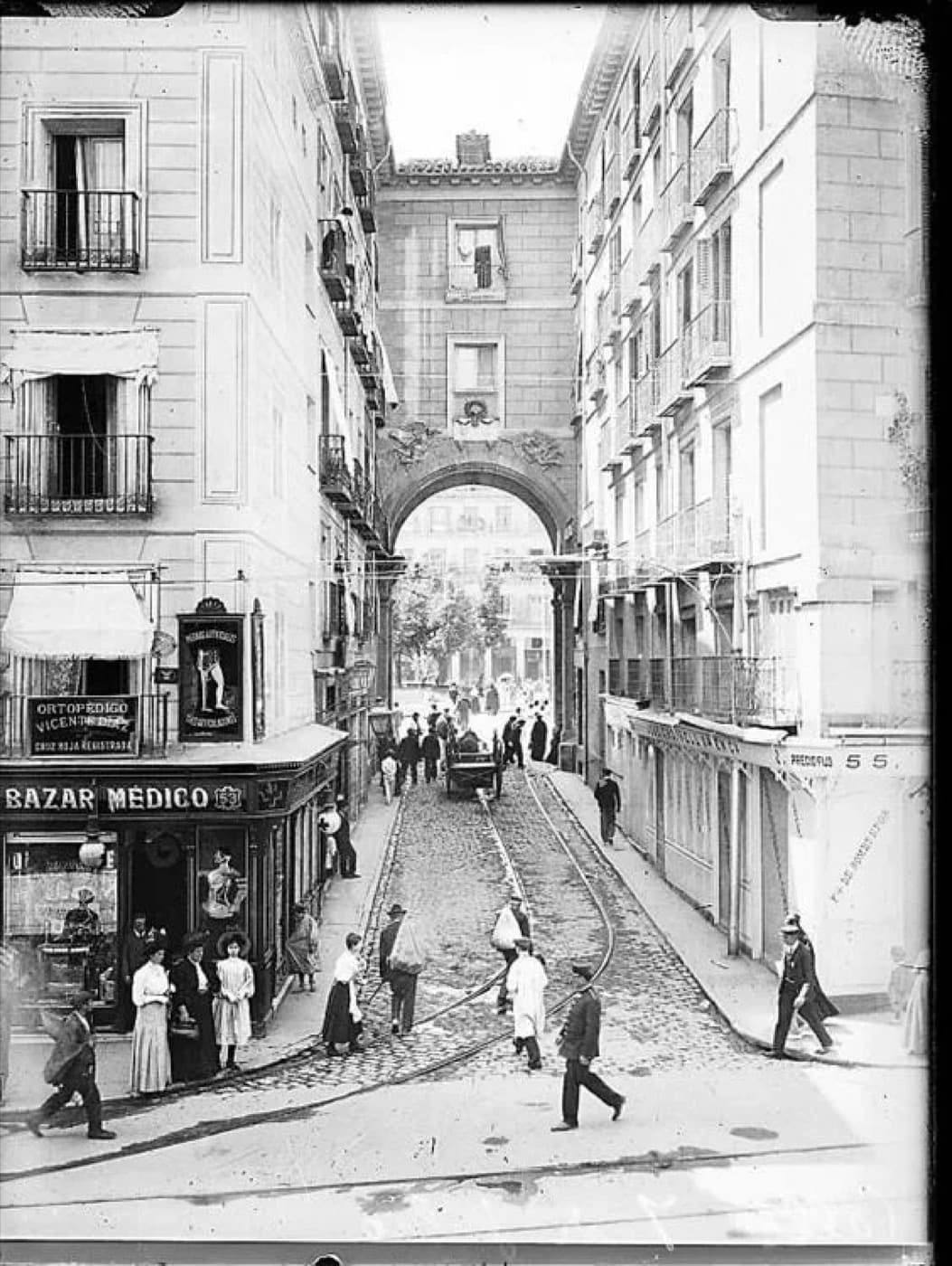
By the late 1800s, the heart of Madrid still kept much of its medieval layout. Cramped, irregular and chaotic streets slowed everything down, while a growing population began to demand more modern solutions. The idea of opening an avenue to connect Calle Alcalá with Plaza de España first appeared in 1862, but construction did not actually begin until 1910. This ambitious project was divided into three main sections and took more than twenty years to finish, stretching all the way to 1931.
Why not experience it with a local guide?
Book a free tour through central Madrid: local guides, small groups and no upfront payment.
See the free tours →Why the street changed names so many times
Although we know it today simply as Gran Vía, it was not always called that. During construction and in its early decades, the different sections carried different official names before the whole avenue was finally unified under the single name Gran Vía, restoring its original identity as Madrid's great artery.
- Avenida del Conde de Peñalver
- Calle de Pi y Margall
- Avenida de José Antonio (during the Franco dictatorship)
A street that connects the city, physically and culturally
Gran Vía was designed to link strategic points of Madrid, but it quickly became a cultural connector too. From the very beginning it was the centre of the city's social and artistic life. In the first half of the 20th century it turned into Madrid's entertainment hub, thanks to landmark theatres and cinemas such as the Cine Capitol and the Teatro Lope de Vega, many of which still draw crowds today.
A symbol of modernity
From day one, the name Gran Vía stood for the modernity and progress of Madrid. It was a monumental feat of engineering that transformed the city not only architecturally but socially. The name also carried an aspiration: to turn Madrid into a modern, cosmopolitan capital able to hold its own alongside the great cities of Europe.
Surprising facts about Gran Vía
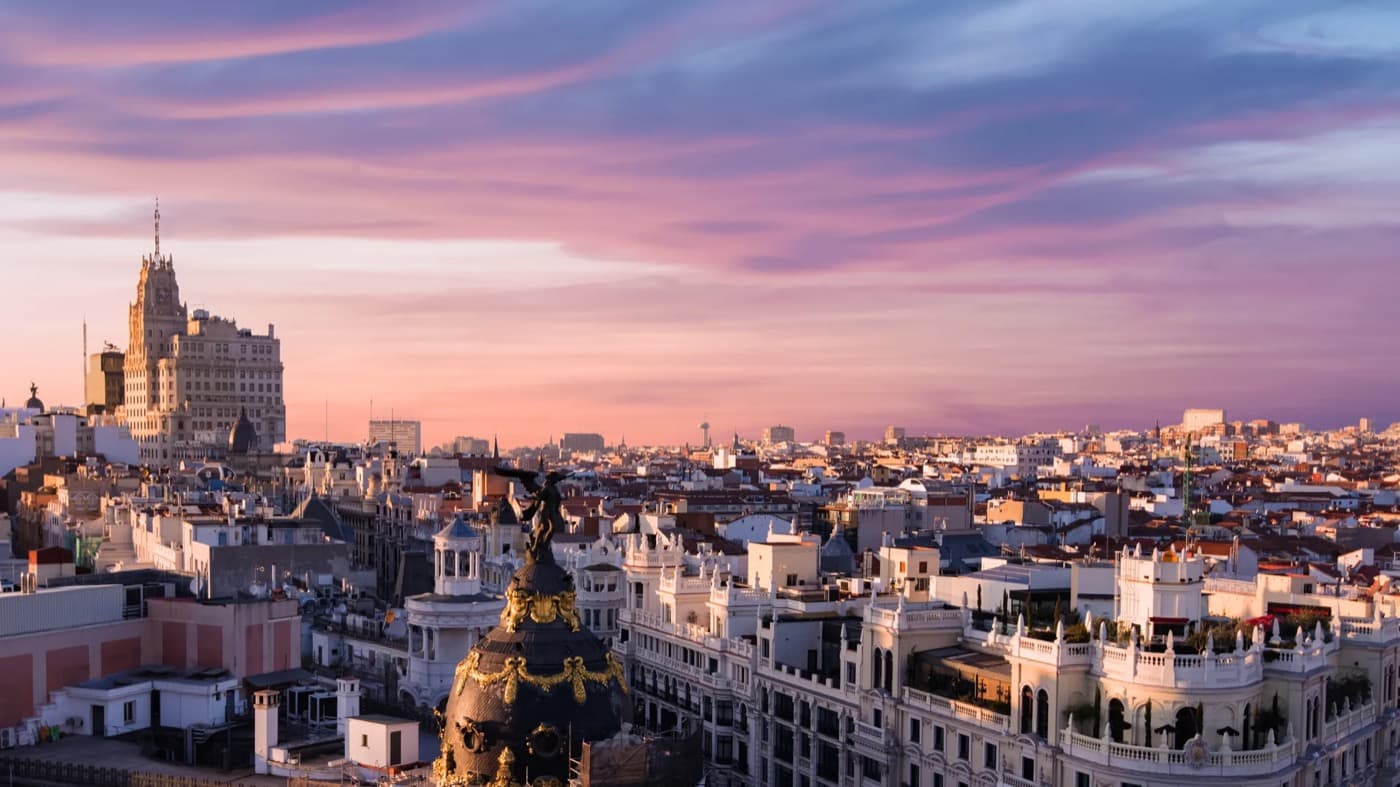
Gran Vía is packed with history, and a few details tend to surprise visitors. The Telefónica Building on the avenue was Madrid's first skyscraper and, in its day, one of the tallest buildings in Europe. Here are a couple more facts worth knowing before you walk it.
- A royal ceremony launched the works. On 4 April 1910, King Alfonso XIII inaugurated construction with a symbolic ceremony, striking the first blow with a silver pickaxe.
- More than 300 buildings were demolished. Building Gran Vía meant tearing down hundreds of older structures, changing the face of Madrid forever.
What to see and do on Gran Vía today
Today Gran Vía is one of the most vibrant and energetic streets in Madrid. Whether you have an hour or a whole afternoon, there is plenty to enjoy. You can also discover more of Madrid's landmarks on one of our free tours through the city centre.
- Admire the architecture. From Art Déco facades to iconic early skyscrapers, Gran Vía is an open-air museum.
- Catch a show or musical. It is the ideal place for live theatre, with productions on a par with Broadway or the West End.
- Go shopping. From major international chains to smaller local shops, there is something for every taste.
Why not experience it with a local guide?
Book a free tour through central Madrid: local guides, small groups and no upfront payment.
See the free tours →Conclusion: Gran Vía, far more than a name
Gran Vía is not just an avenue, it is a mirror of how Madrid has transformed and modernised over time. Its name captures an ambition that is still alive today: to be a place of connection, culture and modernity. On your next visit, take the time to walk this iconic street and soak up its energy. We would love to share more stories like this with you on one of our free tours around Madrid.
Why not experience it with a local guide?
Book a free tour through central Madrid: local guides, small groups and no upfront payment.
See the free tours →