A Street Named After Sorrow
Have you ever heard someone in Spain sigh that you are dragging them down the street of bitterness? It sounds dramatic, and it is, but the phrase is not simply a turn of speech. It traces back to a very real corner of Madrid and to one of the oldest, darkest legends the city has to tell.
What Is Calle de la Amargura?
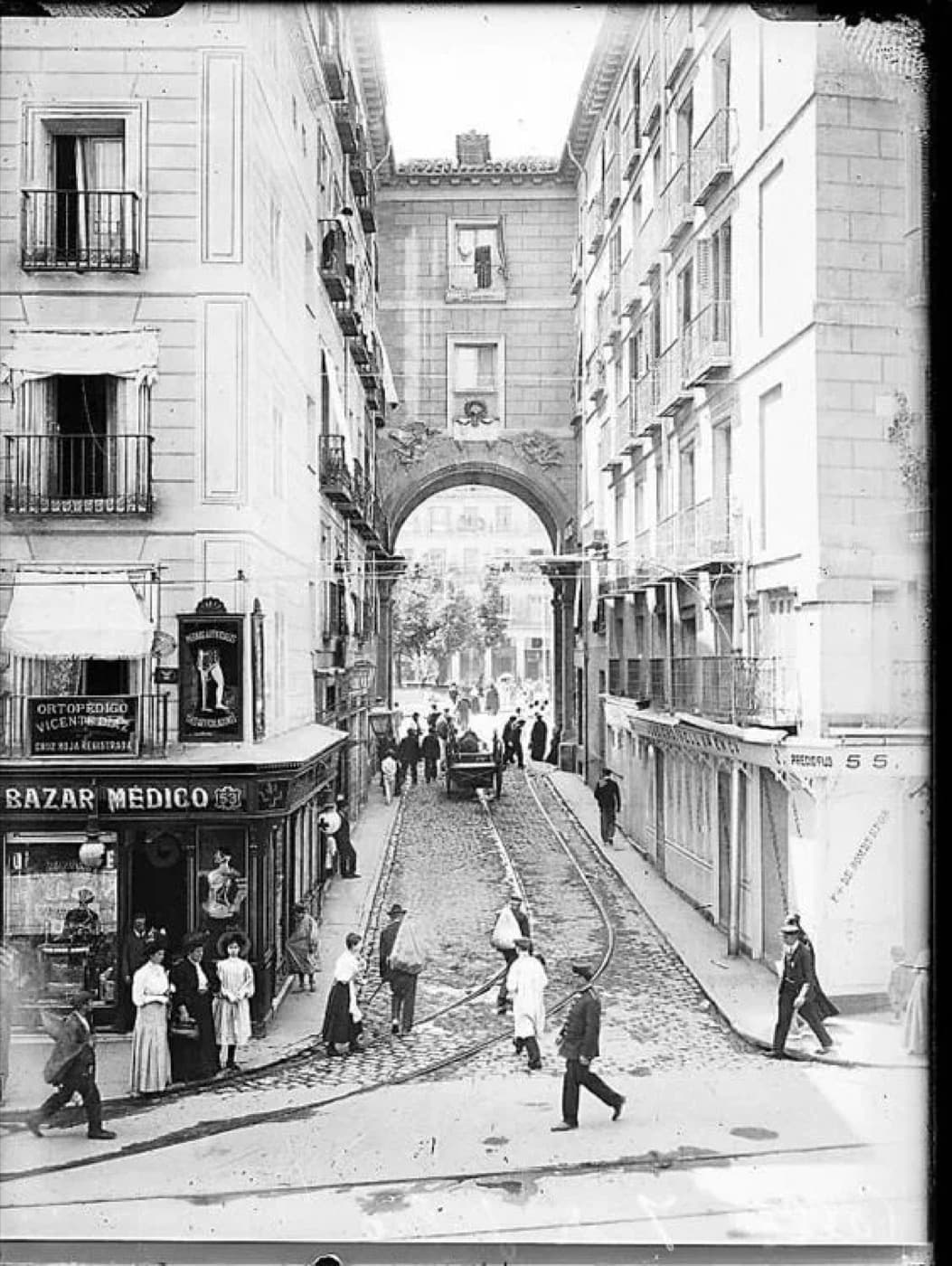
Calle de la Amargura, which you might translate as the Street of Bitterness, is far more than a colourful saying. It is a genuine place woven into the fabric of Madrid's history. You will find streets by this name scattered across Spain and Latin America today, yet the original seems to belong to the Spanish capital, tucked away just a few steps from the Plaza Mayor.
Why not experience it with a local guide?
Book a free tour through central Madrid: local guides, small groups and no upfront payment.
See the free tours →Where the Name Comes From
So why would anyone christen a street with such a mournful name? There is no single tidy answer. Over the centuries several explanations have taken root, each one adding another layer to the mystery. Let us walk through the most enduring of them.
The Bitter Herb
Long before the Plaza Mayor became the grand square we know today, this patch of the city was a marshy stretch of water called the Laguna de Luján. According to one theory, a herb with a distinctly bitter taste grew along one of the paths that led down to the lagoon, and it was that sharp flavour, they say, that gave the street its name.
A Soldiers' Farewell
Another account carries us back to the reign of Alfonso XI in 1342. This, so the tale goes, was the street where soldiers said goodbye to their loved ones before marching off to fight at Algeciras. Moved by the grief of those partings, the Archbishop of Toledo is said to have murmured, 'This is the place of bitterness.'
The Inquisition
The most widely repeated explanation, however, belongs to the age of the Inquisition. When someone was condemned to death, whether by hanging, by the garrotte, or burned at the stake on charges of witchcraft, the execution was a public spectacle, and crowds gathered in the Plaza Mayor to watch. Legend holds that the families of the condemned would file into the square along one particular street, the one known today as Calle Siete de Julio, weeping for the loved ones they were about to lose. That sorrowful procession, the story goes, is what earned the road its name as the Calle de la Amargura.
The Words of Rodrigo Calderón
The phrase is also bound up with Rodrigo Calderón, a politician and soldier who served Felipe III. As he was led to his own execution, he is said to have given the expression its lasting weight with a single bitter line: 'Like Christ, you parade me past the houses of his judges along this street of bitterness.'
Why the Phrase Still Lives On
Somewhere along the way the saying outgrew its grim beginnings and slipped into everyday Spanish. Today it describes any drawn-out ordeal, some long stretch of misery with no clear end. Parents reach for it when scolding a misbehaving child, and it surfaces just as often to describe a relationship that has turned into a slow, wearying trial.
Why not experience it with a local guide?
Book a free tour through central Madrid: local guides, small groups and no upfront payment.
See the free tours →Discover the Legend on Foot
Stories like this one are exactly what make Madrid's legends and mysteries walks so captivating, uncovering the tales that never made it into the guidebooks. Whether you lean towards the bitter herb, the soldiers' farewell, or the long shadow of the Inquisition, a stroll around the Plaza Mayor and its narrow surrounding streets brings a hidden chapter of the city vividly to life. There is no better way to feel the weight of these old legends than to trace them yourself, step by step, on a free tour through the heart of Madrid.
Why not experience it with a local guide?
Book a free tour through central Madrid: local guides, small groups and no upfront payment.
See the free tours →