Plaza Mayor: the beating heart of public life in Madrid
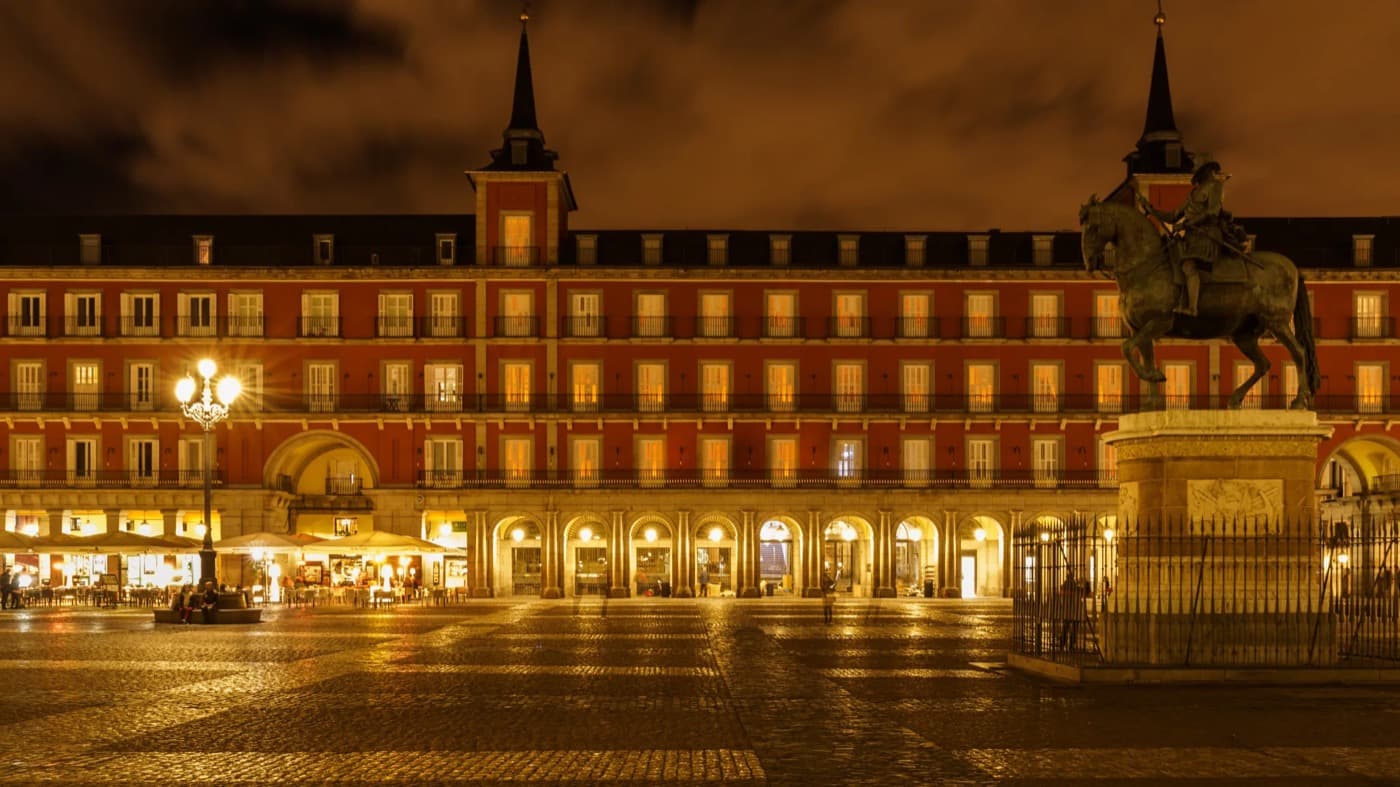
Officially inaugurated in 1619 during the reign of Felipe III, Plaza Mayor was designed to be the centre of Madrid's social and political life. Its strategic position in the middle of the city quickly turned it into a place where markets, religious celebrations, theatrical performances and, sadly, exemplary punishments all came together.
In those days, public squares were multipurpose spaces. They gathered merchants and visitors, but they also served as the ideal setting to display the power and authority of the Crown and the Church. That symbolism made Plaza Mayor the perfect backdrop for events as dramatic as public executions.
1. A message of power and control
In sixteenth and seventeenth century Spain, public executions served a purpose that went far beyond punishing a crime. They were spectacles designed to intimidate and instruct the population. The authorities wanted to remind every citizen of the consequences of defying the king's laws or the teachings of the Church. By staging these acts in a place as busy as Plaza Mayor, they made sure the message reached as many people as possible.
Why not experience it with a local guide?
Book a free tour through central Madrid: local guides, small groups and no upfront payment.
See the free tours →2. Visibility and logistics
With its wide rectangular layout and capacity to hold thousands of spectators, Plaza Mayor was ideal for mass events. Its architecture also made it easy to install temporary platforms and stages, so everyone present could witness what unfolded.
An iconic example is the auto-da-fe of 1680, in which the Inquisition condemned several people accused of heresy in a solemn ceremony that ended in public executions. The event drew the political and religious elite of the day, including King Carlos II himself, along with thousands of onlookers.
3. A place charged with symbolism
Plaza Mayor was not only central, it was also a space loaded with religious and political meaning. Processions and ceremonies honouring both divine and earthly power were held here. In that context, public executions took on a ceremonial character, reinforcing the established order and cementing the authority of those in charge.
The most notorious executions in Plaza Mayor
Among the many events that took place on this iconic stage, a few stand out as especially significant. Alongside the great inquisitorial ceremonies, the square regularly saw the punishment of common criminals. Executions of thieves, murderers and other offenders were frequent, drawing curious crowds and serving as grim public entertainment.
- The execution of Rodrigo Calderon: a politician and favourite of the Duke of Lerma, Calderon fell from grace and was executed in Plaza Mayor in 1621, in one of the most talked-about episodes of the era. His death came to symbolise a shift in the political intrigues of the royal court.
The end of executions in Plaza Mayor
As judicial practices modernised over time, public executions in Plaza Mayor began to fade. From the nineteenth century onwards, such acts were moved to less central locations or stopped being carried out in public altogether. The square that had witnessed so many tragedies was gradually transformed into a place for cultural events and tourism.
Today it is hard to imagine that this beautiful spot, ringed by cafes and shops, was once the setting for such dark episodes. Yet knowing this side of its history helps us appreciate even more its importance as a witness to the unfolding story of Madrid.
Why not experience it with a local guide?
Book a free tour through central Madrid: local guides, small groups and no upfront payment.
See the free tours →Discover the story of Plaza Mayor on our free tours
At Trip Tours we believe every corner of Madrid has a fascinating story to tell. That is why our free tours of Madrid always make a stop in Plaza Mayor to dive into its past full of intrigue, celebration and tragedy. Did you know it was also the place where bullfights and royal festivities were held? Come and discover it all on our guided walks, and let the historical richness of Madrid surprise you.
Why not experience it with a local guide?
Book a free tour through central Madrid: local guides, small groups and no upfront payment.
See the free tours →