Restless spirits: Madrid's most famous ghosts
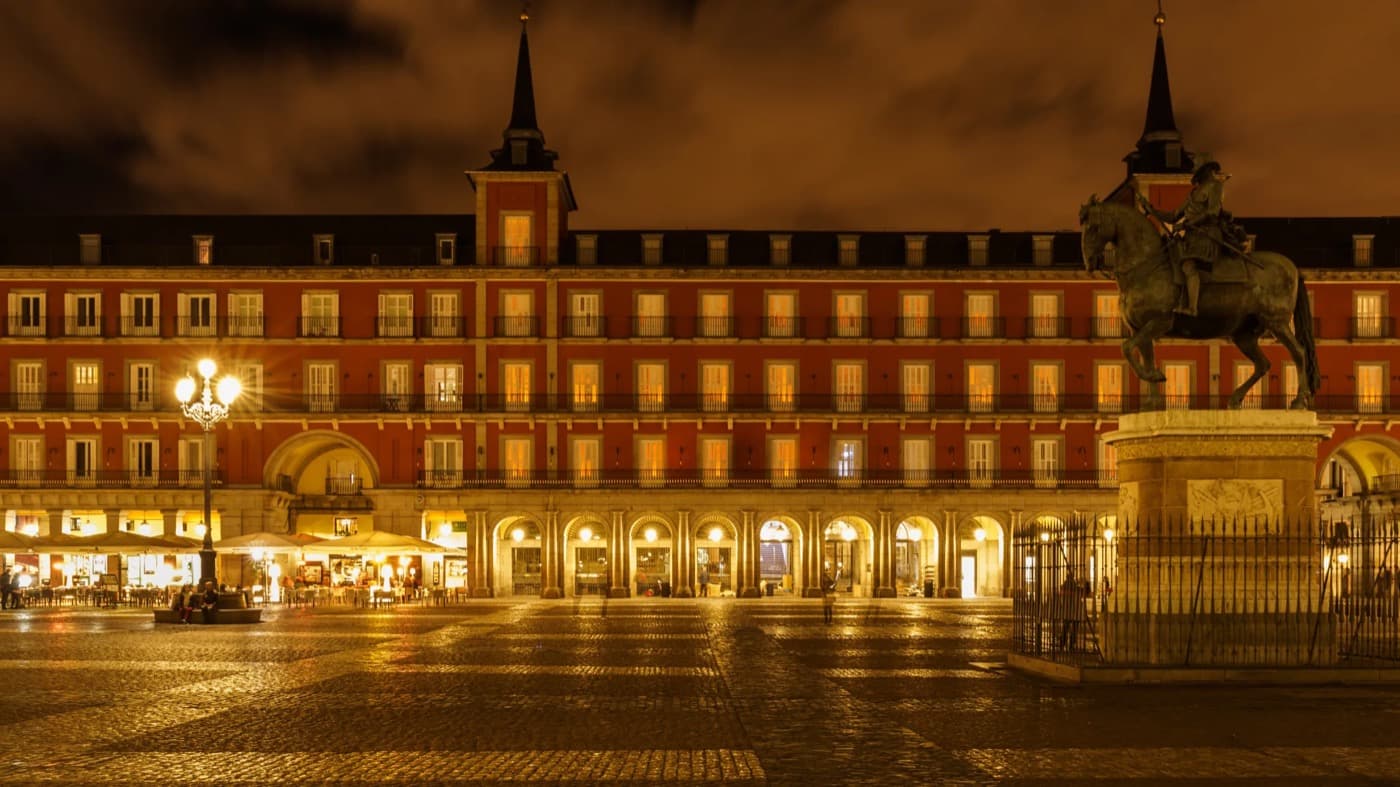
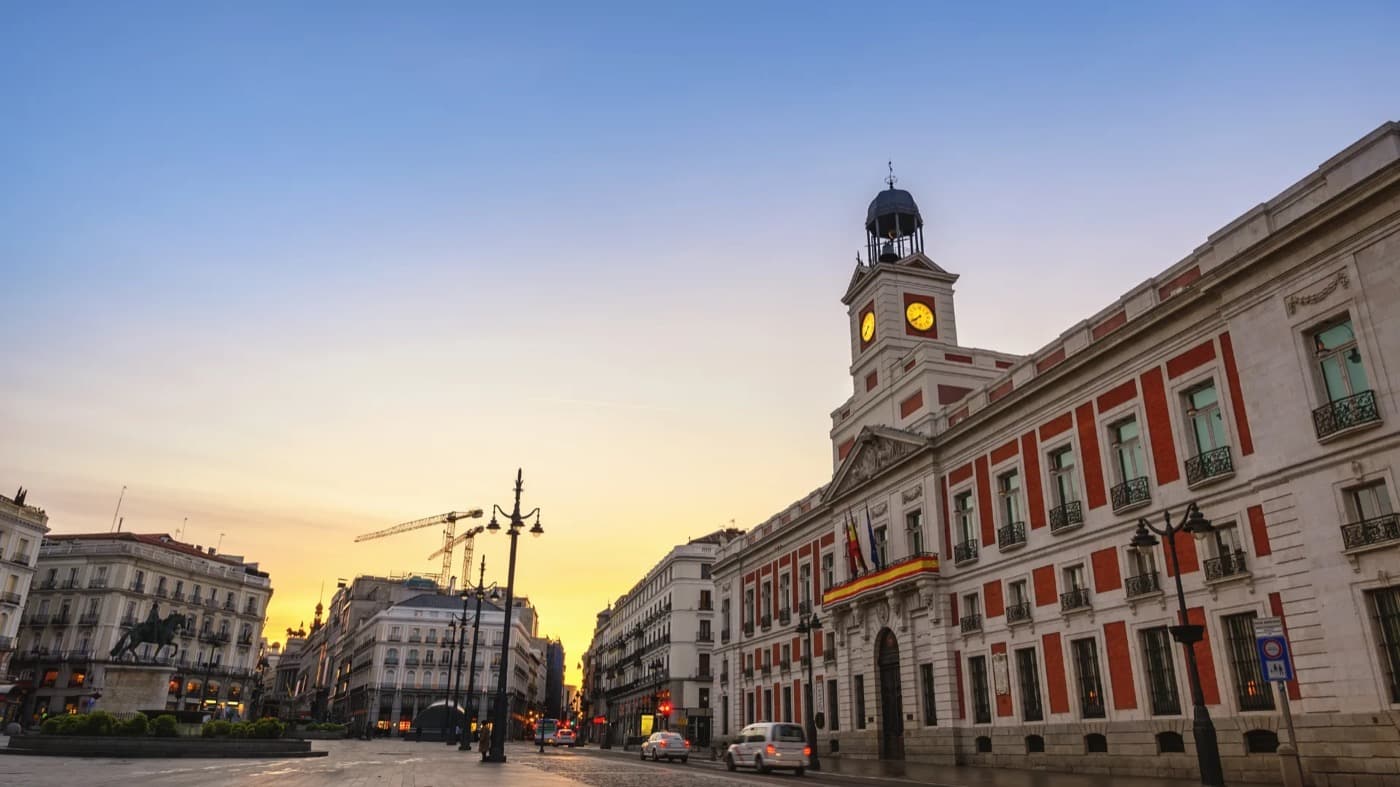
Madrid keeps its ghosts close together. Three of the four sites below stand between Plaza del Rey, Plaza Mayor and Plaza de Cibeles, and the fourth is two minutes from Puerta del Sol. What follows is the story people tell, and then what the record says, because the two often disagree. One of these cases went out on national radio in 1990 and was then proved a fraud by the researchers who went in to check it, and the legend carried on regardless. Another rests on a discovery in a basement wall that nobody has ever explained. A third has no documentary basis at all, though the documented history behind it is better than the invention. Read them before you set off, then look up. In the first story, everything happens on the roof.
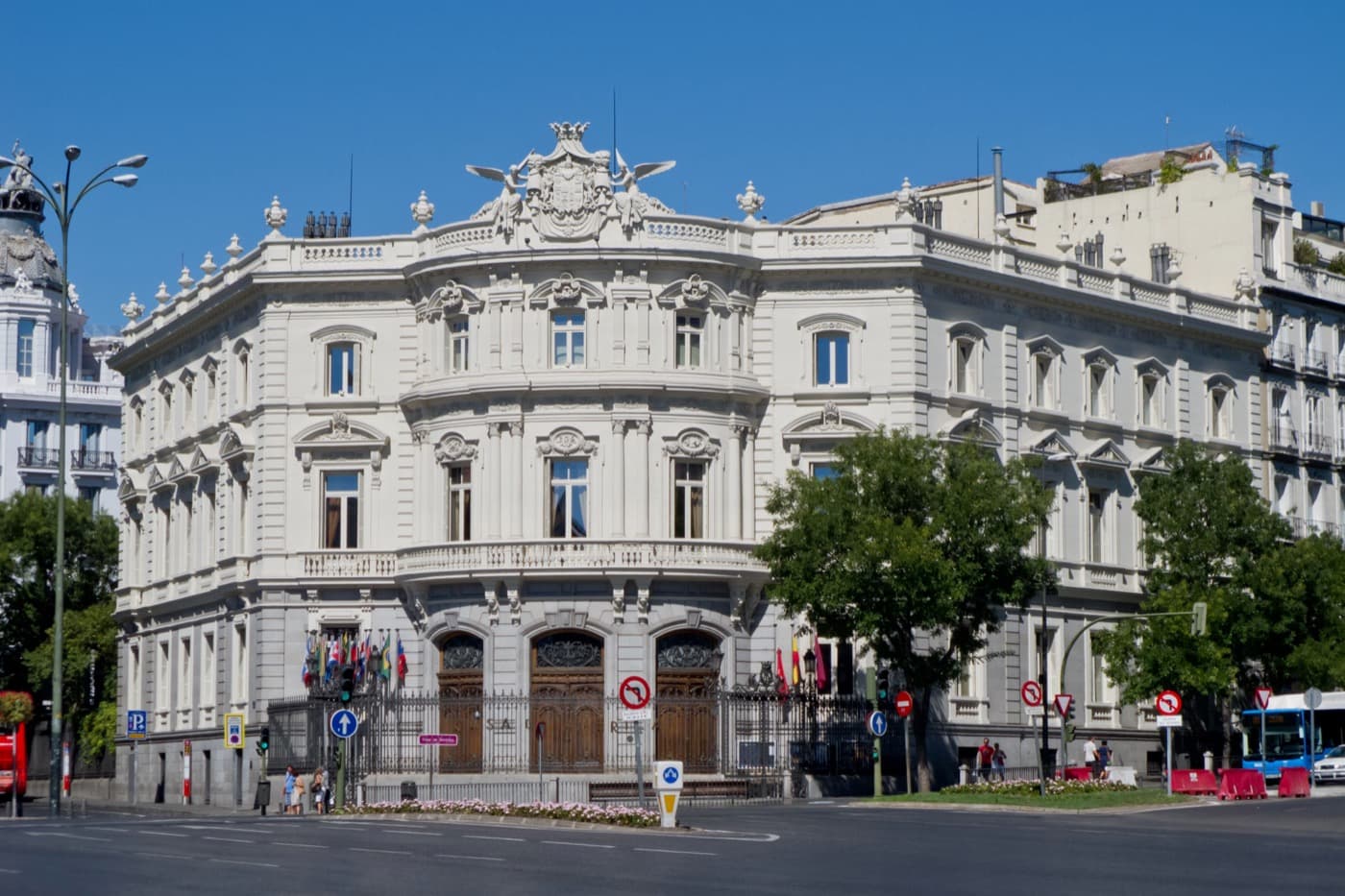
- Casa de las Siete Chimeneas, Plaza del Rey. Built in 1574 under Philip II; the Genoese merchant Sebastian Cattaneo enlarged it later and added the seven chimneys. The legend belongs to Elena, daughter of one of the king's monteros, the men who organised the royal hunts. She married Captain Zapata and the king gave her the house as a wedding gift. Court gossip made her the king's mistress. Zapata left for the wars in Flanders and died at the Battle of San Quintin. Elena was found dead soon after, and her body vanished before burial. Her ghost walks among the rooftop chimneys in white, a torch in one hand, the other pointing toward the Alcazar, the royal residence. The gesture is an accusation. Documented: in the late 19th century, when the house belonged to the Banco de Castilla, building works uncovered the skeletal remains of a woman and period coins walled into a basement. Never explained.
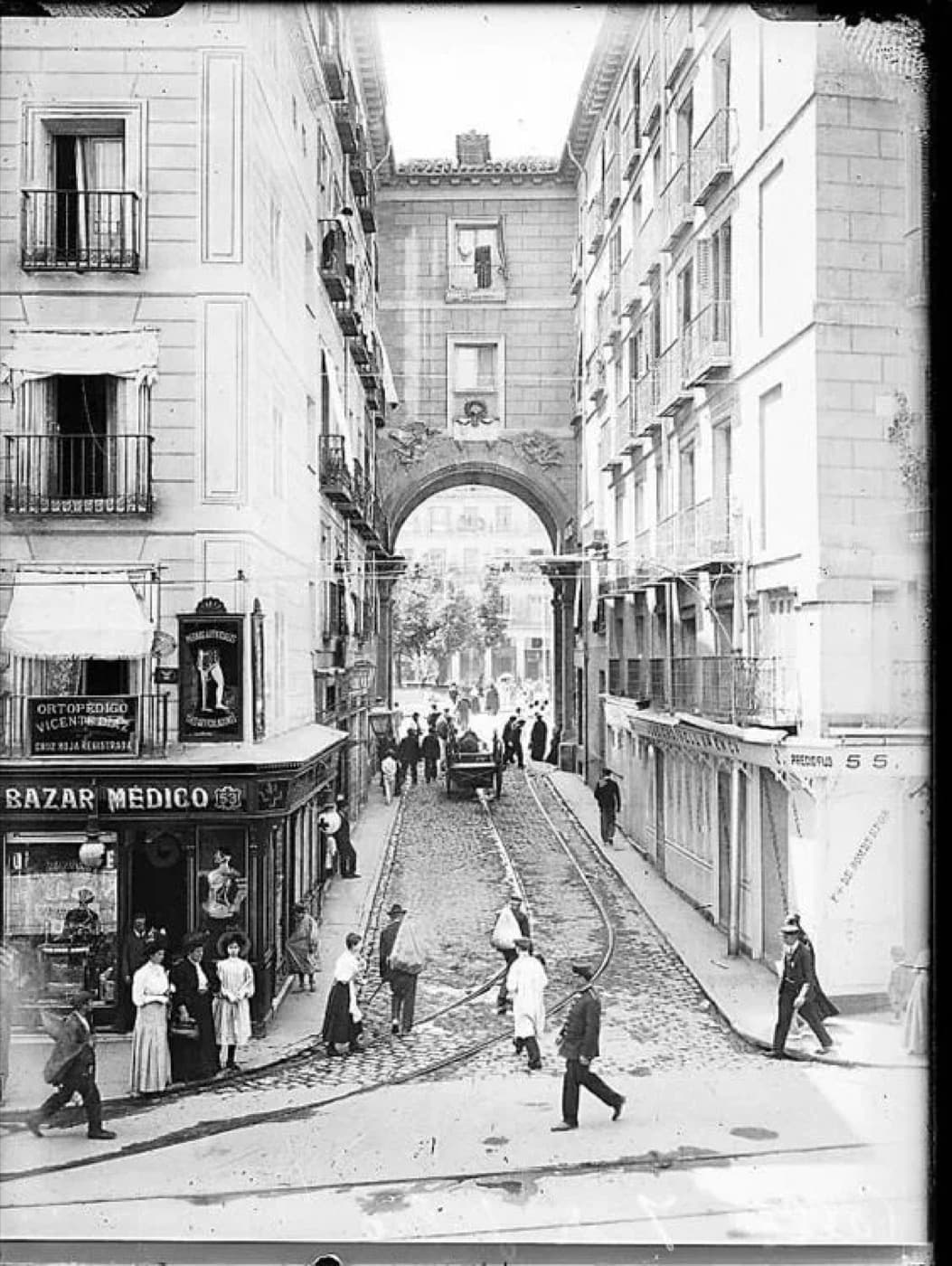
- Plaza Mayor. Until 1765 this was where the Inquisition held its autos de fe in Madrid. The one people still remember was held on 30 June 1680, under Charles II. It lasted a full day, with the court presiding from the balcony of the Casa de la Panaderia. The square's official ghost is Cirilo, said to have been among the first people executed here, and to have been shown innocent of the charges only after his death. He appears, tradition says, to stragglers crossing the square in the small hours. Stand under the arcades at that hour and the square feels very large.
- Palacio de Linares, Plaza de Cibeles. Spain's most famous paranormal case was exposed as a fraud. On 29 May 1990 every radio station in Spain led with alleged EVP recordings made inside this palace, among them the phrase "mamita, mamita, no tengo mamita" (mummy, mummy, I have no mummy), attributed to Raimundita, in legend the marquis's daughter and, by a family secret, also his sister. Dr Carmen Sanchez de Castro brought the tapes to light; on 31 May more than two hundred people went in to investigate. Researchers including German de Argumosa proved the voice was an actress's and that the tapes had been recorded at the doctor's own house. The Spanish State bought the palace in 1992. It is the Casa de America today, it can be visited, and people still ask about Raimundita.
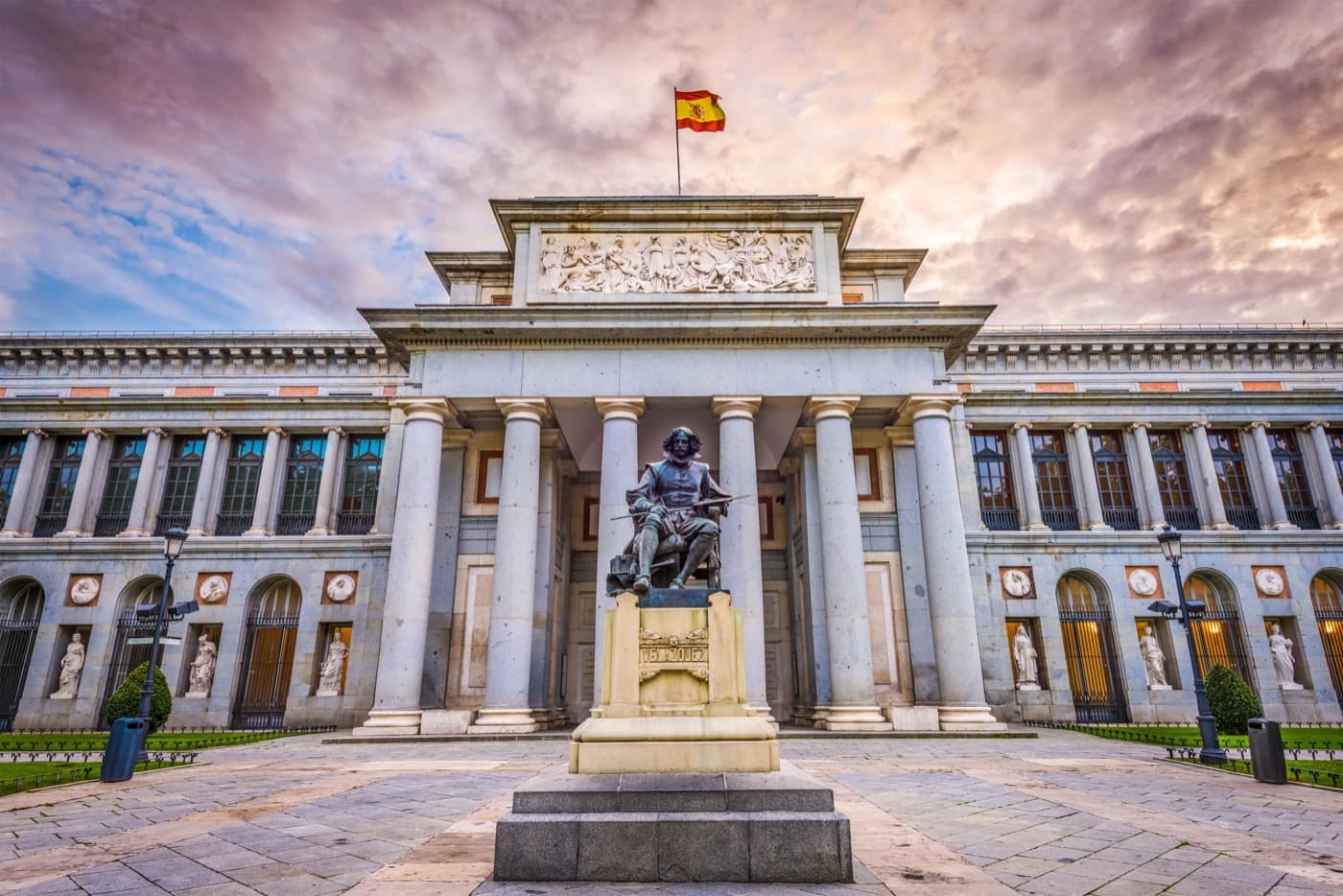
- Monasterio de las Descalzas Reales. The walled-up nun accused of heresy is not history: that story circulates online and no source supports it. What is documented is better. The convent was founded in 1559 by Juana de Austria, in the palace where she had herself been born. Youngest daughter of the emperor Charles V and sister of Philip II, she was widowed young from the heir to the Portuguese throne and left behind a son she would barely see again. For two centuries the house took in women of noble houses and of the royal family, each arriving with a dowry, and those dowries were paintings, tapestries and silverwork. Behind the austere facade is one of Spain's most valuable art collections, including tapestries woven from Rubens cartoons. Poor Clare nuns still live inside, two minutes from Puerta del Sol.
Streets that remember their tragedies
Three names in the old centre, all of them born from something painful. Madrid does not explain itself on plaques, so these stories get filled in by whoever tells them with most conviction, and two of the three below are usually told wrong. The first is not a crime scene. The second is not a ghost story and should not be treated as one. Only the third is genuine folklore, and even that turns out to be a lesson rather than a haunting. The first two are both on Calle de Segovia: the square where it meets Calle de la Villa, and the viaduct that crosses above it. The third is in Malasana. Start with the names, which outlast the stories told about them: Cruz Verde is unnamed on the Texeira map of 1656 and already carries its current name on the Espinosa de los Monteros map of 1769.
- Plaza de la Cruz Verde, where Calle de Segovia meets Calle de la Villa. The murder story attached to this square is false. The green cross was the emblem of the Spanish Inquisition: on the eve of an auto de fe, a wooden cross painted green led the procession to the site of the ceremony, green standing for the hope of eternal salvation for heretics reconciled with the Church. Tradition places a small hill here where minor autos, the autillos, were held, and says a large green-painted wooden cross was raised in memory of the last of them, in Philip II's time. It stood until the Holy Office was abolished in Spain in 1834.
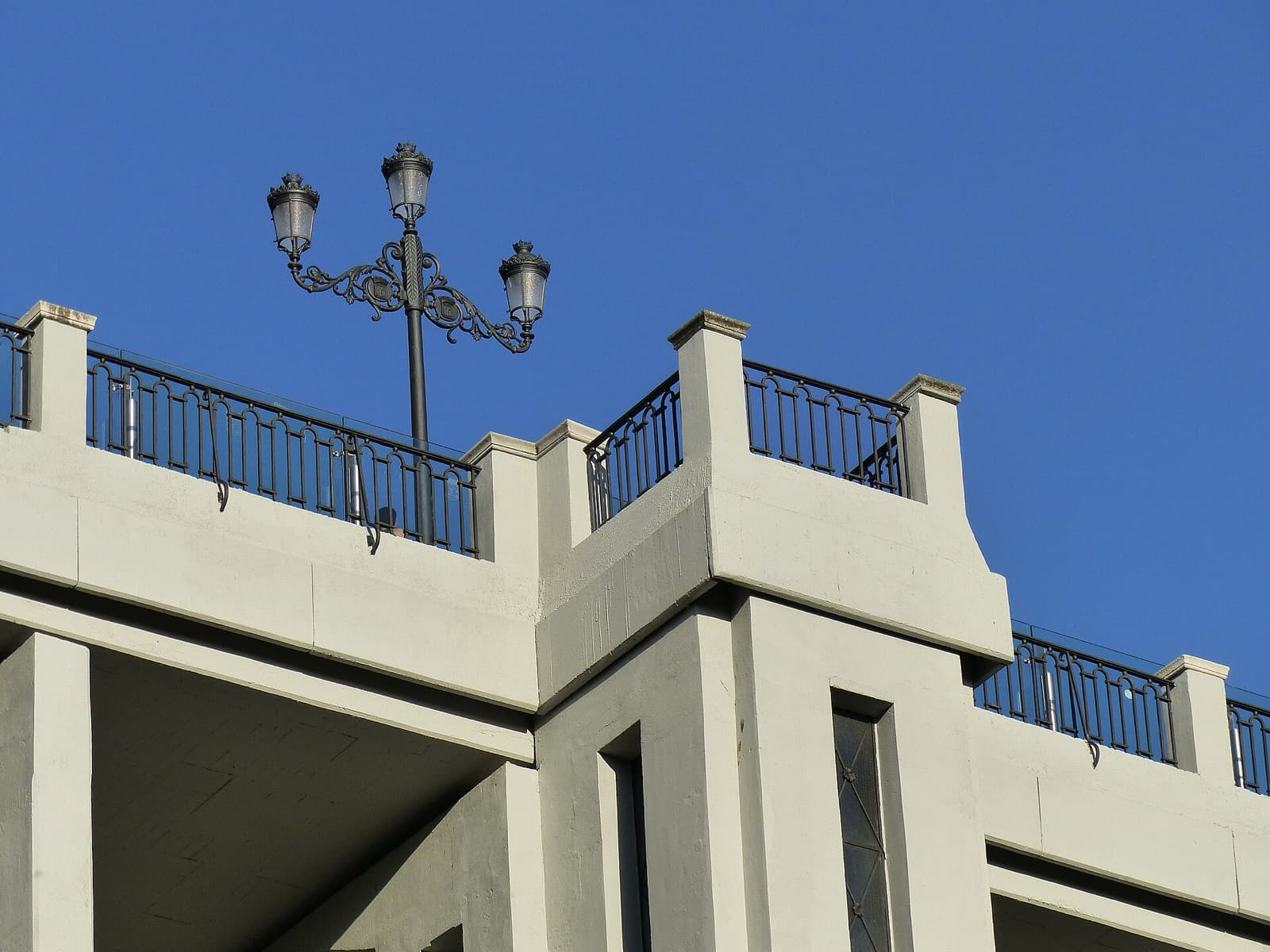
- The Viaducto de Segovia opened in 1874 to bridge the drop of the old San Pedro stream, about 23 metres above Calle de Segovia. For more than a century it went by another name, the suicides' bridge, and that is a public health matter rather than a legend. In 1998 an average of eight deaths a month was recorded. Mayor Jose Maria Alvarez del Manzano ordered methacrylate screens installed along the parapet, and they worked: the figure has fallen to virtually zero since, and the screens are still maintained and renewed. What remains is the view, over the Almudena cathedral and the domes of old Madrid.
- Calle del Desengano, in Malasana, was Calle de los Basilios, after a monastery of Basilian friars. The legend is 16th century, when sword duels were commonplace: two swordsmen of the court, both Italians living in Madrid, fell in love with the same woman. One was Vespasiano Gonzaga, a soldier and a cultivated man, who had served Charles V; the other Jacobo de Gracia, later known as the Caballero de Gracia, who gives his name to another central street. Mid-duel she arrived, veiled. One of them thought that if he embraced and kissed her in front of the other, his rival would concede. He drew her close and lifted the veil. There was no face underneath: there was a skull. Both fled believing it was the devil's work, and the street has been called del Desengano, of the disillusionment, ever since. The disillusionment is not hers: it belongs to two men ready to kill each other over something that was not there when the veil came up.
Night free tour · 2 h 15
Haunted Madrid Free Tour
Witches, unsolved crimes and the Inquisition, after dark with a local guide through the old town. Groups of 25 people at most. Booking is free.
Book your spot →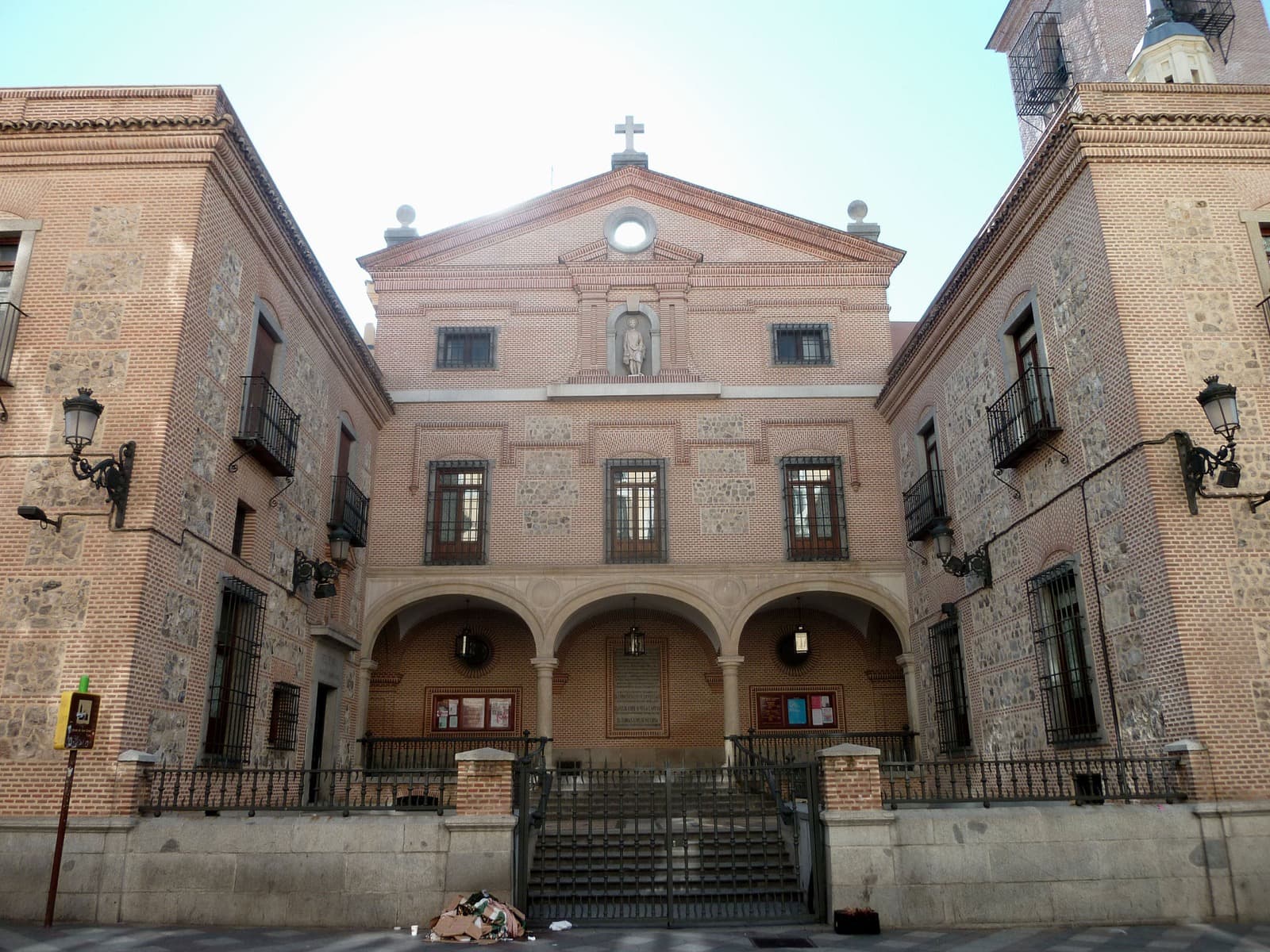
The ghost of the Telefonica Building
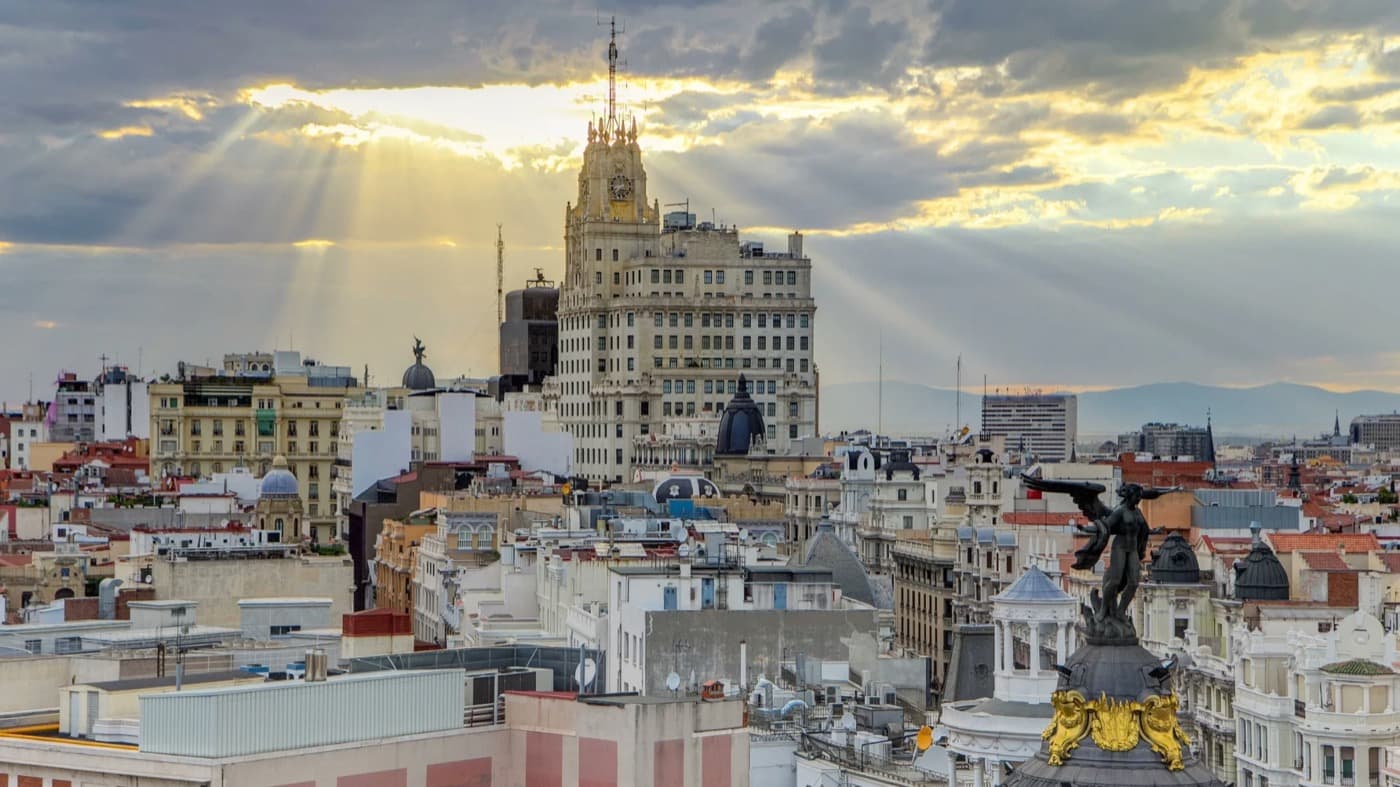
Look up at Gran Via 28 and you are looking at the first skyscraper Madrid ever built. The Telefonica building was completed in March 1929, rises 88 metres and remained the tallest thing in the city for decades. The architect was an American, Louis S. Weeks. Inside, the night staff tell a story about a child. The child is called Goyito, said to appear between the ninth and thirteenth floors and credited with opening and closing doors. Another version, involving a mischievous goblin during construction, has no independent source behind it, so we leave it out.
- Goyito is a building legend in the purest sense: born on night shifts, kept alive by the people who work them, never written down. Ask who the child was, when the story starts or why it stays between floors 9 and 13, and there is no answer. Nothing about the origin is documented: not the who, not the when, not the why. That absence is worth noticing rather than filling in. The other ghosts on this list come with a biography attached, however invented. This one has only a nickname and a range of floors, which is probably why it has lasted.
- The documented history of the tower is harder than any ghost. During the Spanish Civil War it was the highest point in central Madrid, which made it an observation post and, for the same reason, an artillery target during the siege of the city. Foreign correspondents filed their reports from its floors. Stand on the pavement at Gran Via 28 and look up: whatever the night staff say about floors 9 to 13, the genuinely frightening chapter of this building's story is the one on the record.
Where to experience the legends of Madrid
Almost every place in this article sits inside a rectangle small enough to cross on foot: Plaza Mayor at one corner, Plaza de Cibeles at another, the Viaducto de Segovia to the west, Calle del Desengano to the north. That is the useful part. These stories are not scattered across a region: they are stacked in the same few streets, and several of them are wrong exactly where they are repeated most confidently. Walk with the dates in your head: 1574 at the Casa de las Siete Chimeneas, 30 June 1680 in Plaza Mayor, March 1929 on Gran Via, 1990 at the Palacio de Linares. The verifiable version is the better story.
- Base yourself between Puerta del Sol and Plaza Mayor, and the whole list opens up on foot. The Monasterio de las Descalzas Reales is two minutes away, San Gines sits on Calle del Arenal just west of Sol, and Gran Via 28 is a few minutes north. Head the other way and Calle de Segovia brings you to the Plaza de la Cruz Verde, where Calle de la Villa meets it, then up to the Viaducto. Plaza del Rey and Cibeles close the circle on the eastern side.
- Check opening hours before you set out. The Descalzas is a working enclosed convent with Poor Clare nuns still living inside, so plan around its visiting times. The Palacio de Linares, bought by the Spanish State in 1992 and now the Casa de America, can be visited. At Gran Via 28 you look up from the pavement: 88 metres, finished in March 1929, Madrid's first skyscraper, by the American architect Louis S. Weeks. Late afternoon suits the rooftops at Plaza del Rey and the view from the Viaducto over the Almudena and the domes of old Madrid.
- Every stop has one detail that carries the story. Count the seven chimneys at Plaza del Rey, added by the Genoese merchant Sebastian Cattaneo, and note the direction the woman in white supposedly points: toward the Alcazar, the royal residence. That gesture is the accusation. At Cibeles, the two lions are Hippomenes and Atalanta in the myth, and the underground dragon never existed: the real one was plumbing, a spout carved by Alfonso Giraldo from Ventura Rodriguez's 1791 design so water carriers could fill their barrels. Inside San Gines there is an El Greco, and the Templar treasure is false, with no historical evidence behind it.
- If you would rather hear it than read it, a free walking tour of Madrid's darker corners strings most of these streets into one route and is booked with no payment upfront. Use the guide: ask whether the Templar treasure under San Gines has any source, ask what German de Argumosa proved about the Linares tapes, ask who Goyito was before he started opening doors between the ninth and thirteenth floors. A guide who answers "nobody knows" to that last one is being straight with you.
Why not experience it with a local guide?
Book a free tour through central Madrid: local guides, small groups and no upfront payment.
See the free tours →Halloween in Madrid: these legends after dark
Most of these stories are best heard at night, and Halloween is the obvious time. Our Halloween in Madrid guide covers the long weekend from 31 October to 2 November, with the legends you can walk to. If you speak Spanish, the Haunted Madrid free tour explores the darker side of the old town after dark (it is run in Spanish only), and in English the Madrid Medieval free tour stops at the Plaza de la Cruz Verde, the square named after the Inquisition's green cross.
Night free tour · 2 h 15
Haunted Madrid Free Tour
Witches, unsolved crimes and the Inquisition, after dark with a local guide through the old town. Groups of 25 people at most. Booking is free.
Book your spot →