Why is it called Puerta del Sol?
The name Puerta del Sol, literally the Gate of the Sun, dates back to the 15th century. Back then Madrid was a walled city, and this spot was home to one of its main entrance gates. The gate faced east, where the sun rose each morning, so it was decorated with a carved sun that eventually gave the square its name. More than just a way into the city, the gate was a strategic meeting point for travellers and merchants, which quickly turned it into one of the busiest hubs in the capital.
A key stage in the history of Madrid and Spain
Puerta del Sol is not only a landmark you use to find your way around the city centre. It has also been the setting for some of the defining moments in Spanish history. Standing in the middle of the square, you are surrounded by centuries of events that shaped the country. Here are the three that matter most.
- The uprising of 2 May 1808: this is where the people of Madrid rose up against Napoleon's French troops. The revolt marked the start of the Spanish War of Independence, one of the most important chapters in the nation's history.
- The proclamation of the Second Republic (1931): on 14 April 1931 the Second Spanish Republic was proclaimed right here, a turning point that changed the country's political system.
- From military gate to social heart: over time the square shifted from a military and commercial space to the social and cultural core of Madrid, witnessing protests, demonstrations and huge public celebrations alike.
Why not experience it with a local guide?
Book a free tour through central Madrid: local guides, small groups and no upfront payment.
See the free tours →Kilometre Zero: where all of Spain's roads begin
One of the most photographed spots in Puerta del Sol is Kilometre Zero, a plaque set into the pavement in front of the Casa de Correos building. It marks the exact point from which every one of Spain's radial national roads is measured. In other words, this small brass slab is officially the centre of the country. Step onto it, look for the outline of the map of Spain, and take the classic photo that proves you stood at the heart of it all.
The clock on the Casa de Correos
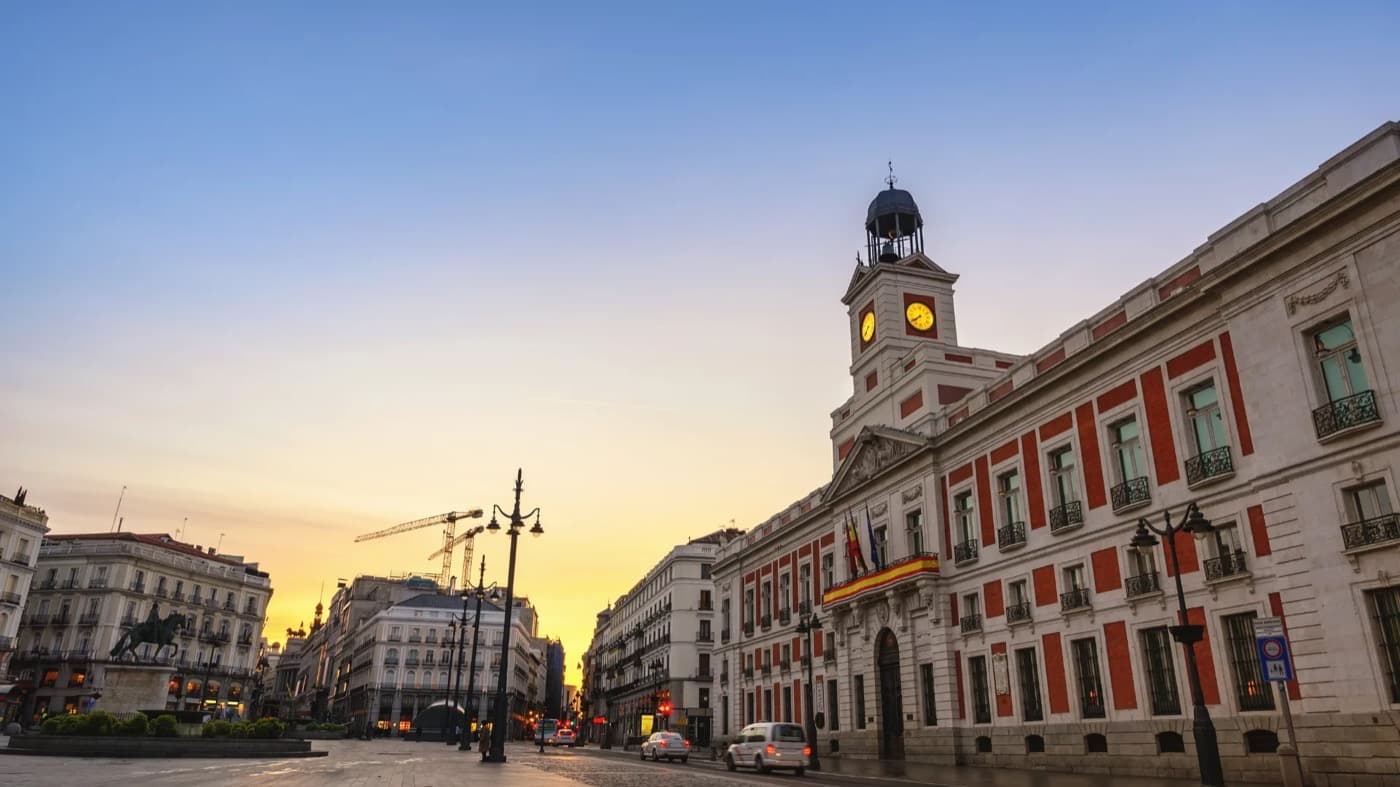
The Casa de Correos, built in the 18th century, is the other great protagonist of the square. Its clock tower is famous across the country for ringing in the New Year. Every 31 December, millions of Spaniards watch or gather beneath it to hear the twelve chimes that see out the old year and welcome the new one. Even on an ordinary afternoon, the building and its clock are an unmistakable symbol of Madrid.
The Bear and the Strawberry Tree
In the northeast corner of the square stands the statue of El Oso y el Madroño, the Bear and the Strawberry Tree. It is one of the best loved symbols in Madrid because it reproduces the city's coat of arms, and it has become a natural meeting point for locals and visitors. Arranging to meet at the bear is a Madrid classic, and it makes the perfect starting point for exploring the historic centre on foot.
Curiosities about Puerta del Sol
Beyond its monuments, the square hides plenty of stories and traditions that reveal just how central it is to Spanish life. These are a few of the details that surprise most first-time visitors.
- The twelve grapes tradition: the custom of eating twelve grapes in time with the midnight chimes was born here in Puerta del Sol in the early 20th century and is now a nationwide New Year's Eve ritual.
- An epicentre for protest: the square was the focal point of the 15-M movement in 2011, the so-called indignados, a moment that left its mark on contemporary Spanish history.
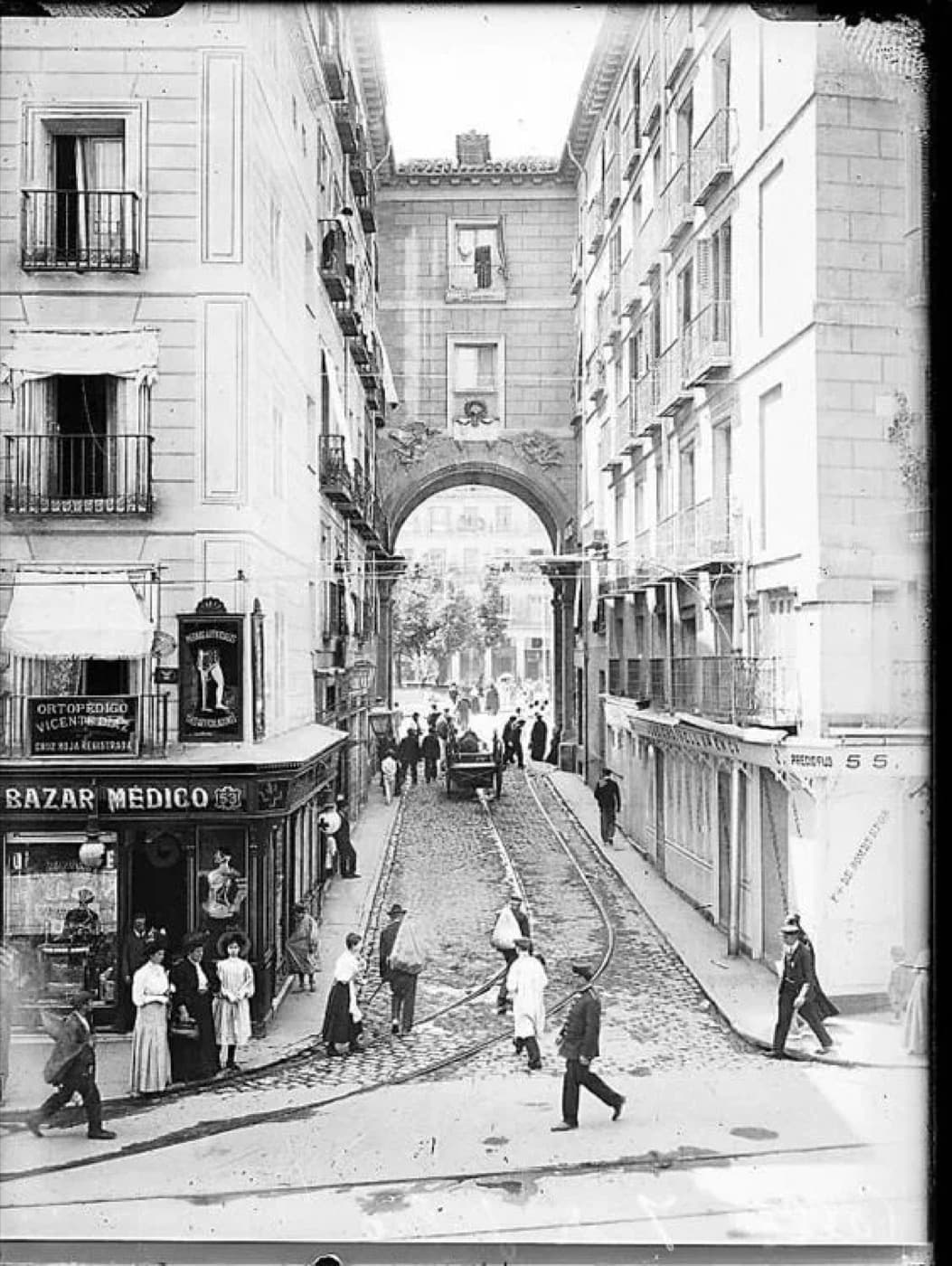
- A smaller square once upon a time: during the 19th century, urban reforms enlarged Puerta del Sol and gave it the open, spacious shape we know today.
Things you should not miss in Puerta del Sol
If you are heading to the square, take your time and tick off these simple must-dos. Each one connects you to a different piece of Madrid's story, and together they make the perfect introduction to the historic centre before you wander deeper into the city.
- Take a photo at Kilometre Zero, an iconic memento of standing at the centre of Spain.
- Admire the clock on the Casa de Correos, an emblem of the city even far from New Year's Eve.
- Find the Bear and the Strawberry Tree statue, an ideal place to begin your walk through central Madrid.
- Join a free tour of historic Madrid with Trip Tours to hear the full story on the ground.
Why not experience it with a local guide?
Book a free tour through central Madrid: local guides, small groups and no upfront payment.
See the free tours →Puerta del Sol, the heart of Madrid
Understanding the history of Puerta del Sol is essential to understanding how Madrid grew and why it became the social and cultural epicentre of Spain. This square does not just connect the city physically, it links its past with its present. At Trip Tours we invite you to uncover all its secrets on one of our free tours through the historic centre. Do not miss the chance to walk through the very heart of Madrid and dive into its remarkable history.
Why not experience it with a local guide?
Book a free tour through central Madrid: local guides, small groups and no upfront payment.
See the free tours →