What makes Las Meninas so special?
The greatness of Las Meninas lies not only in its monumental size but in the way Velazquez plays with perspective and light to create a portrait within a portrait. In the central scene we see the Infanta Margarita surrounded by her ladies-in-waiting, the meninas who give the painting its name. What makes the work truly extraordinary is that Velazquez paints himself into the canvas, brush in hand, while the royal couple appears reflected in a mirror at the back of the room. This technique pulls the viewer into the scene as if standing exactly where the king and queen would be, a feat of composition that few artists have ever matched.
- Painted by Diego Velazquez in 1656, at the height of his powers as court painter
- The central figure is the Infanta Margarita, daughter of Philip IV
- Velazquez includes a self-portrait, an unusual move for the era
- The royal couple appears only as a reflection in the back mirror
The mystery of the reflection in the mirror
One of the most debated aspects of Las Meninas is the mirror on the back wall, which reflects King Philip IV and Queen Mariana of Austria. This small detail has inspired countless interpretations. Some argue the monarchs are the subjects Velazquez is painting, standing just outside the canvas. Others believe they are simply watching the scene from the same vantage point as us, the viewers. That deliberate ambiguity is a large part of why the painting has never stopped fascinating art historians and visitors alike.
Why not experience it with a local guide?
Book a free tour through central Madrid: local guides, small groups and no upfront payment.
See the free tours →Secrets and legends of Las Meninas
Look closely at Velazquez's chest and you will see the red cross of the Order of Santiago. This insignia was not part of the original painting. It was added later, most likely by Velazquez himself, after he was knighted by the king. The cross is a symbol of the prestige and social standing the artist had achieved, and it reinforces just how important his role had become within the court. Small details like this turn the canvas into a document of ambition as much as a work of art.
- The Cross of Santiago on Velazquez's chest was a later addition
- It marks his knighthood and rising status at court
- The painting doubles as a statement about the nobility of the painter's craft
What happened to the figures in Las Meninas?
Many of the figures in Las Meninas have documented stories of their own. The Infanta Margarita, the luminous child at the centre, was expected to become a queen but died young before she could take the throne. The ladies-in-waiting who attend her, along with the dwarves and the dog resting in the foreground, all played real roles in daily palace life. Learning who these people were adds a layer of depth that is not obvious at first glance, transforming a group portrait into a snapshot of a living, breathing court.
Frequently asked questions about Las Meninas
Two questions come up again and again in front of this painting. First, why did Velazquez paint it? He created Las Meninas not only as a portrait of the Infanta Margarita but also as a claim to his own standing in the court, showcasing his technical mastery and his closeness to the king. Second, why is the composition so celebrated? The arrangement of the figures, the handling of light, and Velazquez's position as he paints all suggest a direct interaction between the painting, the artist and the viewer, creating a realism that many consider one of the earliest works to challenge the relationship between spectator and canvas.
- Why did Velazquez paint it? To portray the Infanta and assert his own place at court
- Why is the composition famous? For its groundbreaking use of perspective and light
- Why does it feel so alive? The viewer is placed inside the scene, not outside it
Why not experience it with a local guide?
Book a free tour through central Madrid: local guides, small groups and no upfront payment.
See the free tours →See Las Meninas on our free tour of the Prado
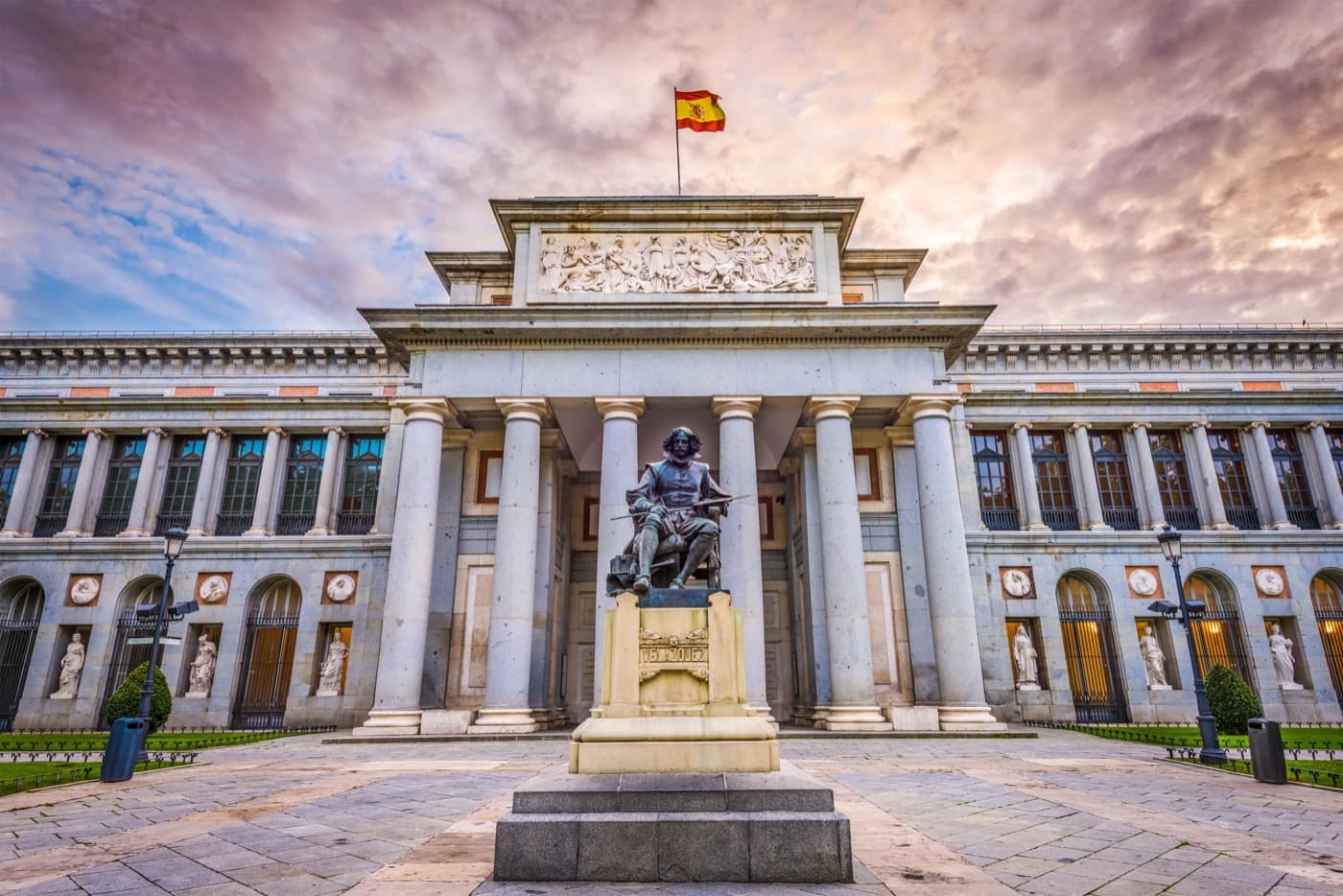
The story of Las Meninas is a journey through art, politics and life at the court of the Habsburgs. Velazquez's masterpiece does not just capture a moment in time, it invites you to step into a complex and layered scene. If you want to experience it up close, join our free tour of the Prado Museum, where our expert guides reveal the secrets behind this and other iconic paintings. Do not miss the chance to discover one of the greatest treasures of Spanish art with Trip Tours Madrid.
Why not experience it with a local guide?
Book a free tour through central Madrid: local guides, small groups and no upfront payment.
See the free tours →