The birth of an architectural giant
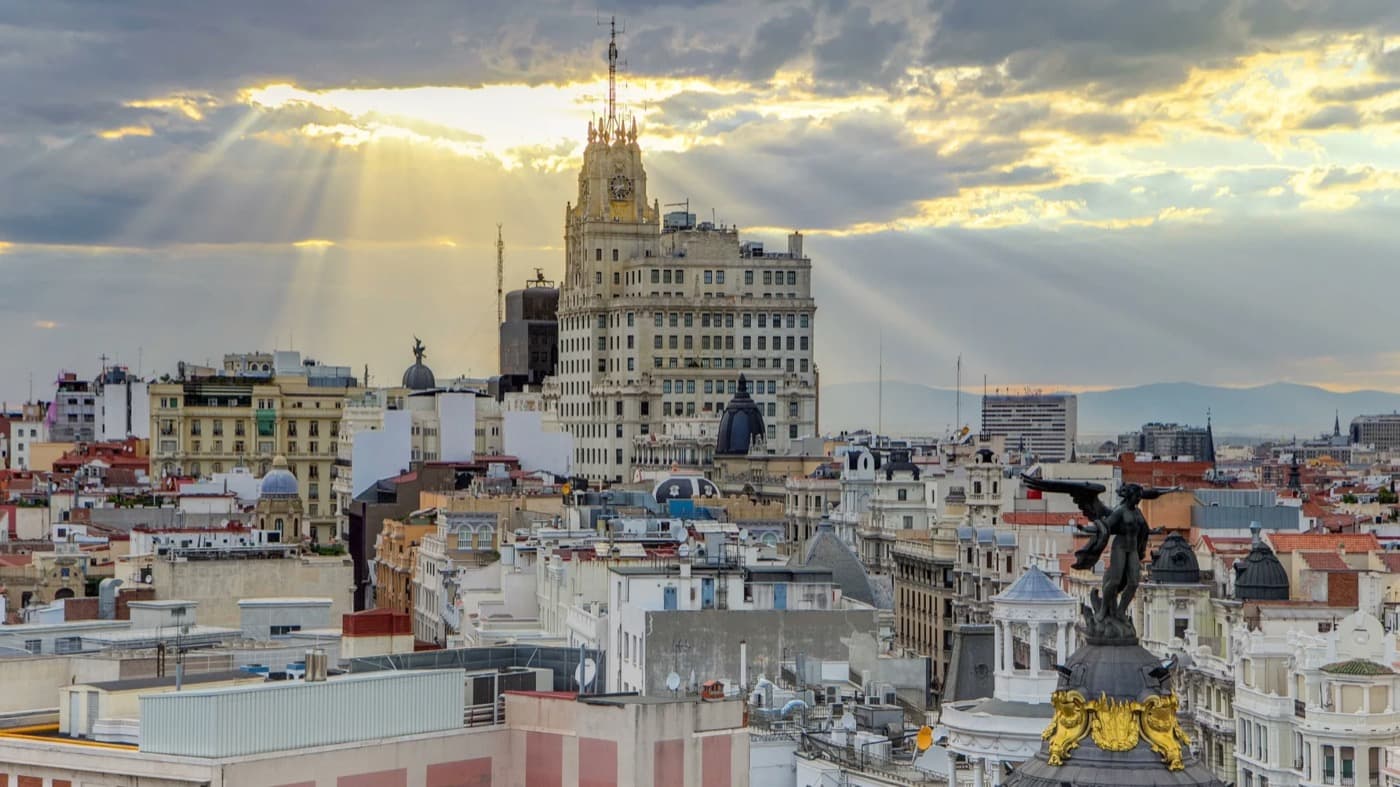
In the early years of the twentieth century, Madrid was reinventing itself, clearing away old streets to make room for a more modern city. Work on the Telefonica Building began in 1926, driven by a fast-growing demand for telecommunications infrastructure. The architect Ignacio de Cárdenas, working alongside the American Lewis S. Weeks, designed a tower inspired by the New York skyscrapers that were starting to define the American skyline. Completed in 1929, the building was far more than an architectural experiment: it introduced a sense of height and modernity that Europe had never seen before. Rising 89 meters across fifteen floors, it became the tallest skyscraper on the continent in its day, a genuine milestone in European architecture. Its design blends the ornament of Spanish Baroque with clean, functional modern lines, capturing the restless optimism of the 1920s.
A telecommunications hub that defined an era
Beyond its striking silhouette, the Telefonica Building quickly became the nerve center of Spanish telecommunications. In its first decades, the country's main telephone operations were run from here, making it a benchmark of technological progress. During the Spanish Civil War, the tower took on a very different role. Thanks to its height and strategic position, Republican forces used it as an observation and communications post, and it drew repeated shelling as a result. Its solid structure held firm through the bombardment, and the building became a symbol of resistance. Its influence did not end with the war: in the decades that followed, it remained a hub of innovation, keeping pace with the advances that shaped telecommunications across Spain.
Why not experience it with a local guide?
Book a free tour through central Madrid: local guides, small groups and no upfront payment.
See the free tours →Transformation and cultural legacy
As the years passed, the Telefonica Building kept adapting to new needs. Today it is home to the Espacio Fundación Telefónica, a cultural center that hosts exhibitions, talks and events at the crossroads of art, science and technology. That reinvention has given the tower a fresh purpose, turning it into a meeting point for culture and creativity well into the twenty-first century. Its commanding facade, meanwhile, remains one of the most photographed sights on Gran Via. Visitors and locals alike still stop to admire the mix of styles that gives it such a distinctive character. Far from a relic of the past, the building is a living landmark that links one generation to the next.
Gran Via, the setting for an icon
The Telefonica Building cannot be fully understood without Gran Via, the avenue that gives it its stage. Often called Madrid's Broadway for its wealth of theaters, cinemas and nightlife, Gran Via traces the evolution of the city across more than a century. From its playhouses and picture palaces to historic landmarks such as the Edificio Metrópolis and the Palacio de la Prensa, the avenue is a living record of how Madrid has grown. Seen against this backdrop, the Telefonica Building feels less like a single monument and more like the centerpiece of an open-air museum of architecture.
A few things you might not know
Behind its familiar outline, the Telefonica Building hides a handful of surprising details worth pausing over.
- International inspiration: its design borrowed heavily from the skyscrapers of New York, and Manhattan in particular, giving it a look unlike anything else in Europe at the time.
- Technological pioneer: it was one of the first buildings in Spain to feature electric elevators and advanced communication systems for its day.
- A literary presence: it has appeared in countless novels and poems as a symbol of modernity, resilience and urban change.
- A wartime lookout: during the Civil War, its rooftop served as a vantage point for tracking troop movements, thanks to the sweeping panoramic views it offered over Madrid.
Why not experience it with a local guide?
Book a free tour through central Madrid: local guides, small groups and no upfront payment.
See the free tours →The Telefonica Building and the Madrid of tomorrow
The Telefonica Building is far more than a monument to the past. It stands as proof of how Madrid has managed to evolve without losing its character, a tower that once embodied the future and still draws locals and travelers today, as much for the culture it houses as for its architecture. If you want to feel that history for yourself, there is no better way than to wander Gran Via on foot, letting the facades and stories of the Telefonica Building and its neighbors unfold at street level, perhaps on a free tour through the heart of Madrid.
Why not experience it with a local guide?
Book a free tour through central Madrid: local guides, small groups and no upfront payment.
See the free tours →