The route at a glance
This is the same path our Madrid tapas tour follows: you start in Chueca at vermouth hour and finish in the Barrio de las Letras, the Literary Quarter. Walking it without stopping takes half an hour. With four or five stops, one drink and one tapa at each, allow two and a half to three hours.
None of the bars below needs a booking, but check opening times on the day: several close between lunch and dinner.
- Start: Plaza de Chueca (Chueca metro, line 5).
- Finish: Plaza de Jesús, at the bottom of Calle de las Huertas (Antón Martín metro, line 1).
- Distance: just under 2 km.
- Best time: 12:30 to 14:30, or from 20:00.
Plaza de Chueca: vermouth on tap
The square has carried this name since 1943. Before that it was Plaza de San Gregorio, and the change honoured Federico Chueca (Madrid, 1846-1908), composer of zarzuelas such as "Agua, azucarillos y aguardiente".
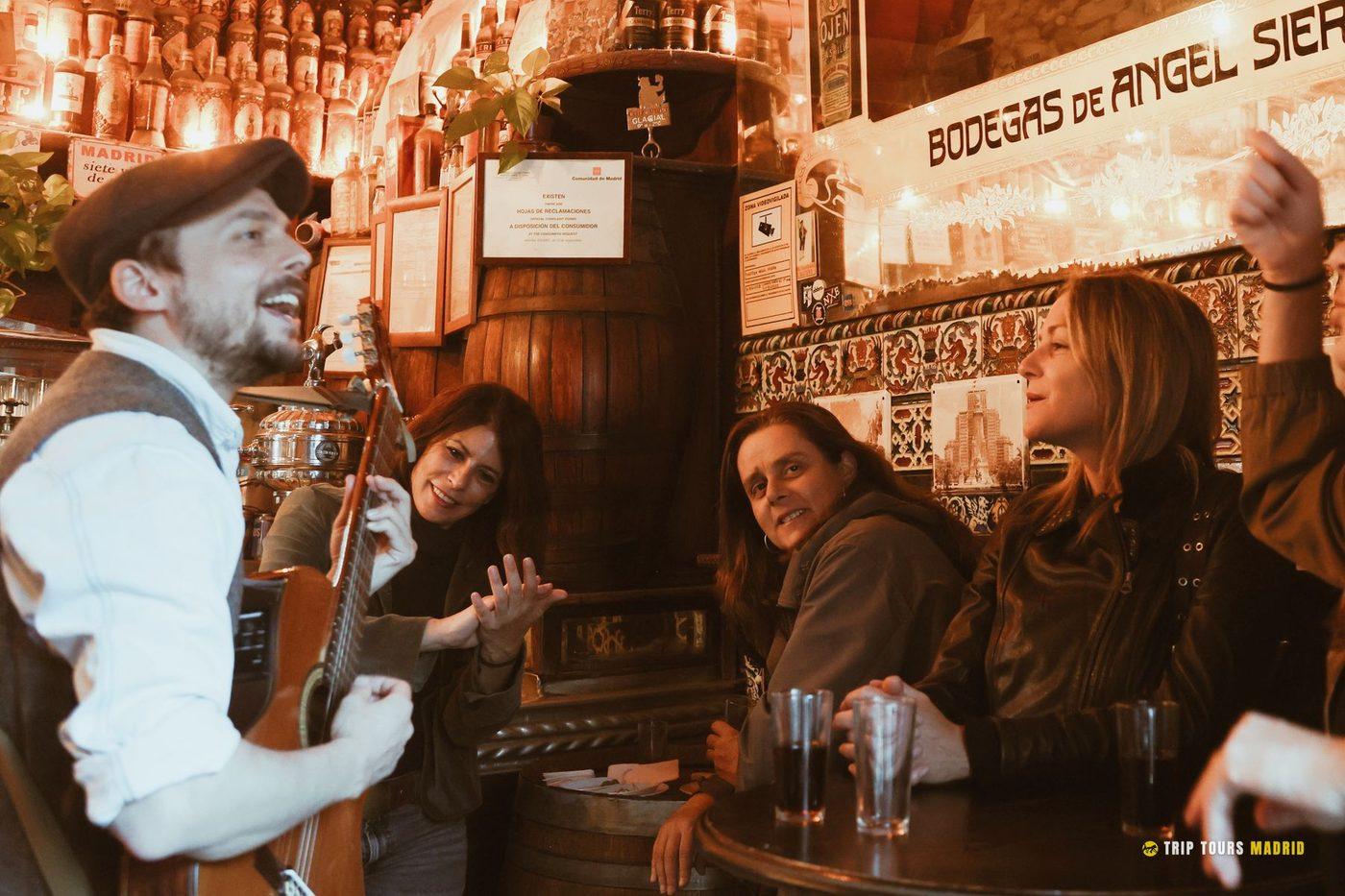
At Calle de Gravina 11, facing the square, stands the Taberna de Ángel Sierra, which has gone by that name since 1917. The tiles, the oak casks and the cabinets of old bottles are still there, and so is the house speciality: vermouth on tap, vermú de grifo. You drink it standing at the bar, with something to nibble.
Food tour · 3 h
Madrid Tapas Tour
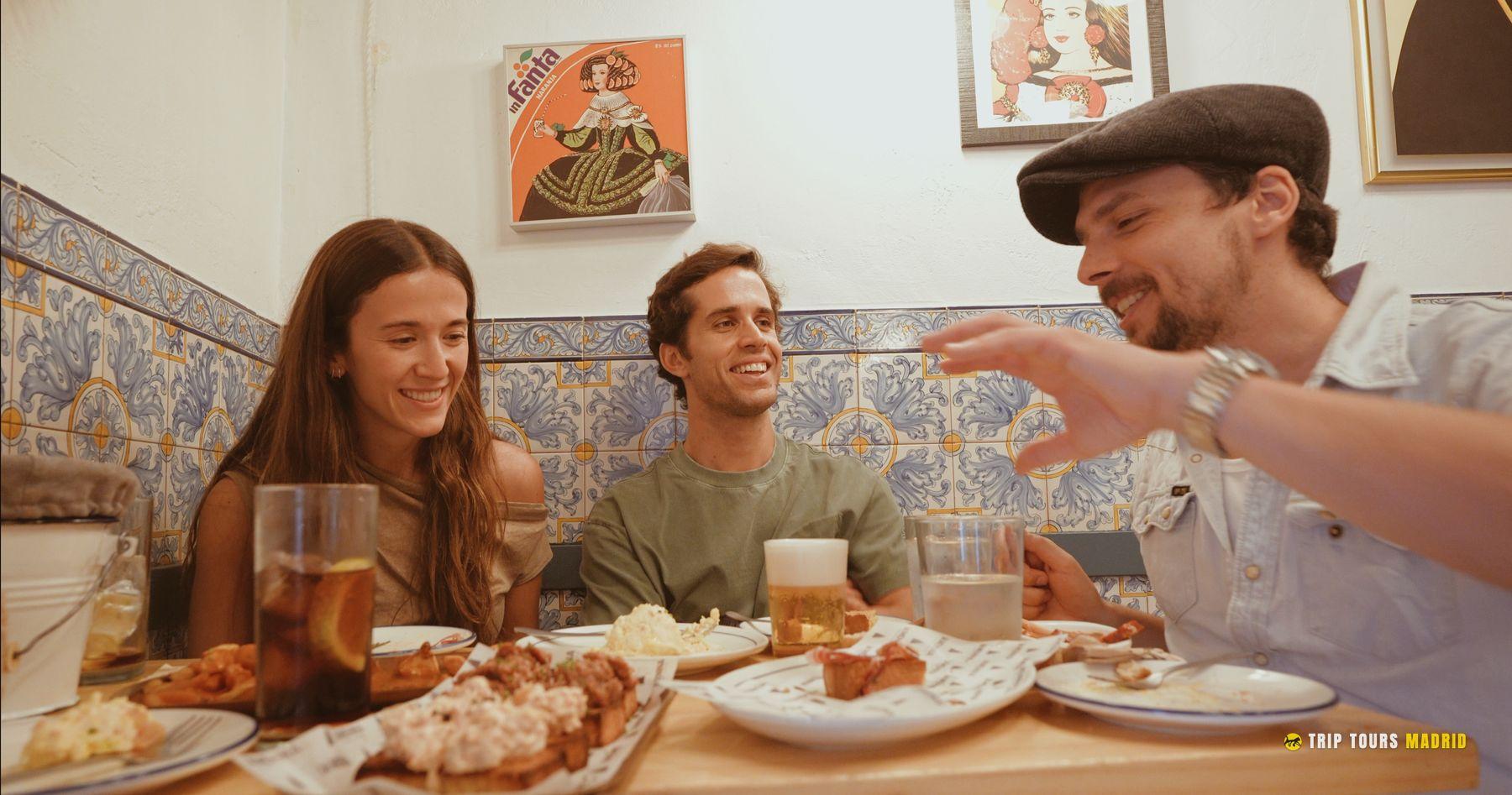
Ten tastings from Chueca to the Barrio de las Letras with Íñigo, a guide from our team: homemade vermouth, local wine and beer and one stop with live Spanish guitar. Small groups.
See the tour →Mercado de San Antón: the neighbourhood market, rebuilt
One minute from the square, at Calle de Augusto Figueroa 24, is the local market. The original building opened in 1945 and was demolished in the 2000s, and the new one opened on 17 May 2011. Inside you will find market stalls, a floor of food counters for a quick bite and a rooftop terrace.
It does two jobs on this route: you see the produce that ends up on the bars, and you can have your second tapa without sitting down.
Crossing the Gran Vía, the street Chueca put on stage before it existed
To reach the Literary Quarter you have to cross the Gran Vía, and here the composer from the square turns up again. Federico Chueca premiered the zarzuela "La Gran Vía" in 1886, when the avenue was only a project the city was talking about. Work on the real street did not start until 1910.
From there, follow Calle de Alcalá and Calle de Sevilla to Plaza de Canalejas. Ten minutes with no bars, just enough to make room.
Calle de Echegaray: sherry and a chalked bill
At Calle de Echegaray 7 you will find La Venencia, open since the 1920s and barely changed. It serves sherry and nothing else: fino, manzanilla, amontillado, oloroso and palo cortado. Your bill is chalked on the wooden bar.
Two house rules are worth knowing before you walk in: no photos and no tips.
Plaza de Santa Ana: beer where a convent stood
Plaza de Santa Ana dates from 1810. Joseph Bonaparte, Napoleon's brother and then King of Spain, ordered the demolition of the Carmelite convent on the site, and the gap became a square. On one side stands the Teatro Español, heir to the Corral del Príncipe, an open-air playhouse where comedies were staged from 1583.
On the south side, the Cervecería Alemana has been open since 1904. It was founded by German industrialists to sell beer, Ernest Hemingway was a regular, and his table by the window is still pointed out. Order a caña, a small draught beer.
Calle de las Huertas: verses underfoot and a tavern from 1827
Calle de las Huertas is the spine of the neighbourhood, and you can read it as you walk: the paving carries quotes from Cervantes, Lope de Vega, Quevedo and Góngora, all of whom lived on these streets in Spain's Golden Age. The full story of the area is in our Literary Quarter guide.
At number 18 is Casa Alberto, opened in 1827 and still in the same building. Tradition has it that Cervantes lived in the house that stood on this plot before. Around the corner, at Calle del León 12, Casa González has sold cheese and wine since 1931 and has tables where you can try them.
One quirk of the street map: Cervantes is buried on Calle de Lope de Vega, and Lope de Vega's house is on Calle de Cervantes.
Plaza de Jesús: the tiled finish
At the bottom of Huertas, almost at the Paseo del Prado, the route ends in Plaza de Jesús. At number 4 is the Taberna de la Dolores, more than a century old, with a tiled façade that is one of the most photographed in the neighbourhood. It is the place for a well-pulled caña and a bite at the bar.
From here the Prado Museum and Antón Martín metro are a few minutes away.
How to order in a Madrid tavern
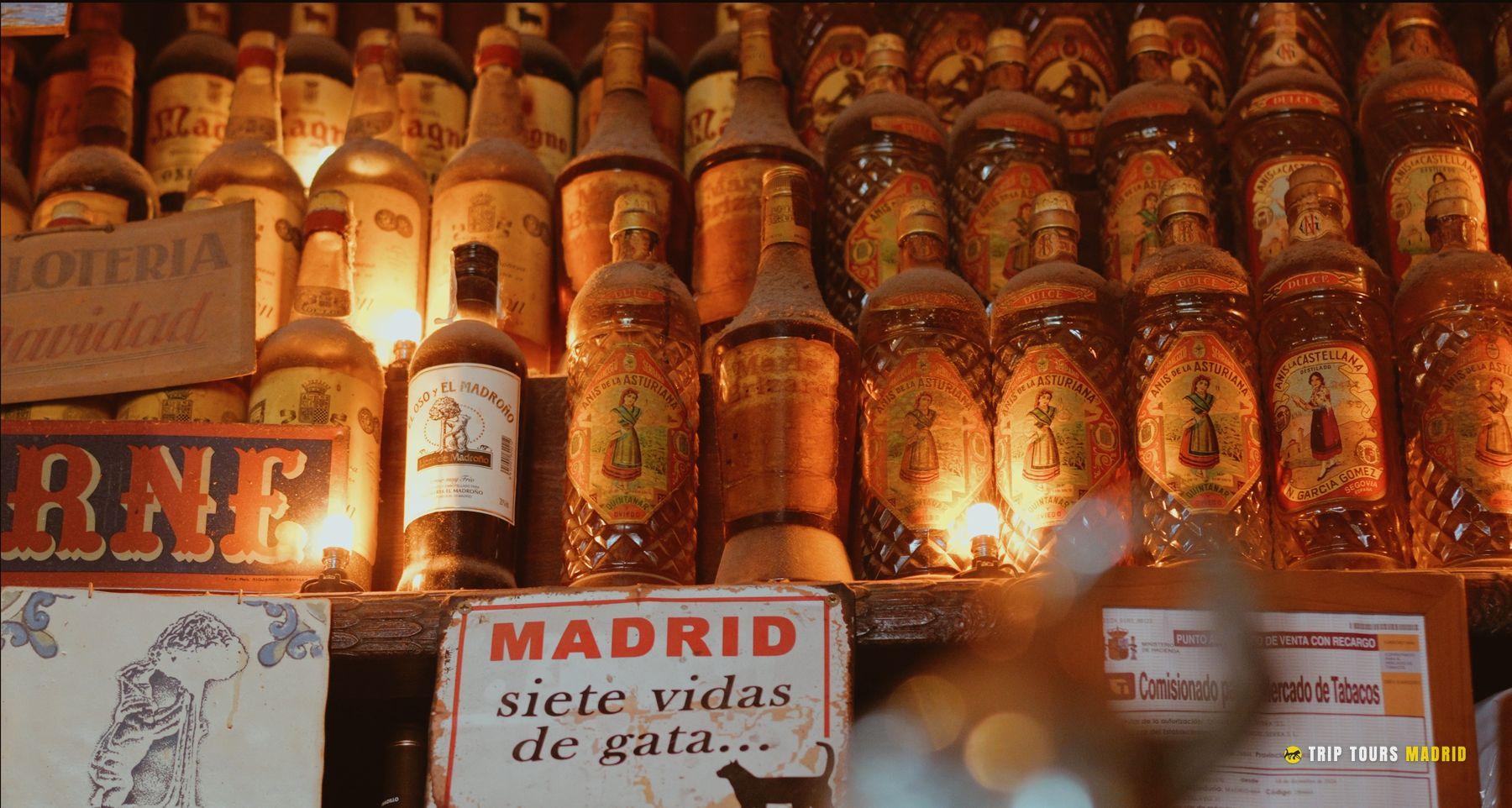
If this is your first tapas crawl, three things help. First: at the bar you order, eat and pay at the end, and nobody expects you to sit down. Second: a tapa is a bite, a ración is a plate to share, and there is nearly always a media ración, a half portion. Third: you do not have dinner in one place, you move on to the next bar.
If you would rather sit down for a proper meal afterwards, there are more addresses in our list of traditional restaurants in Madrid. And if you are wondering where the word comes from, we explain why tapas are called tapas.
- Vermú de grifo: vermouth on tap, a midday drink before lunch.
- Caña: a small glass of draught beer.
- Jerez: sherry. Ask for fino or manzanilla if you like it dry.
Why not experience it with a local guide?
Book a free tour through central Madrid: local guides, small groups and no upfront payment.
See the free tours →The same route, with a guide and a guitar
If you would rather walk these two neighbourhoods without deciding where to go in, that is what our guided tapas tour does: three hours from Plaza de Chueca to the Literary Quarter, with 10 tastings (7 food, 3 drinks) and live Spanish guitar at one of the stops. It runs in small groups, in English or Spanish.
The guide picks the stops, so they may not match the ones in this article.
Frequently asked questions
How long does a tapas crawl from Chueca to the Literary Quarter take?
Walking without stops takes about half an hour, as the route is just under 2 km. With four or five stops, one drink and one tapa at each, allow two and a half to three hours.
What is the best time to go for tapas in central Madrid?
Vermouth hour, from 12:30 to 14:30, or the evening from 20:00. Several historic taverns close between lunch and dinner, so check opening times on the day.
Which are the oldest taverns on this route?
Casa Alberto, on Calle de las Huertas, opened in 1827. The Cervecería Alemana in Plaza de Santa Ana dates from 1904, and the Taberna de Ángel Sierra in Plaza de Chueca has carried that name since 1917.
Is there a guided tapas tour through Chueca and the Literary Quarter?
Yes. Our tapas tour starts in Plaza de Chueca, ends in the Literary Quarter and lasts three hours, with 10 tastings and live Spanish guitar. It runs in English or Spanish.
Food tour · 3 h
Madrid Tapas Tour
Ten tastings from Chueca to the Barrio de las Letras with Íñigo, a guide from our team: homemade vermouth, local wine and beer and one stop with live Spanish guitar. Small groups.
See the tour →